



There are many reasons to visit Milan, Italy’s celebrated capital of fashion and design. A city where centuries of artistic heritage meet contemporary sophistication, Milan captivates with the soaring spires of the Duomo, the timeless genius of Leonardo da Vinci’s The Last Supper, and the glamour of its fashion district. However, one of its most rewarding attractions is often overlooked.
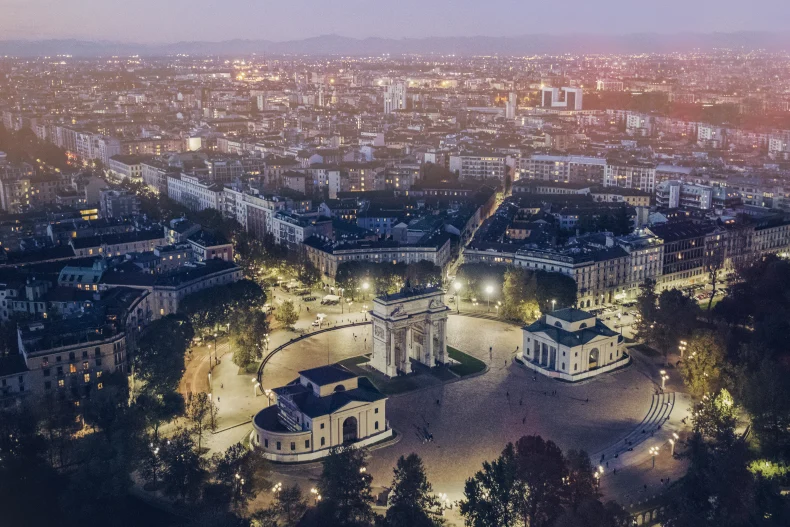
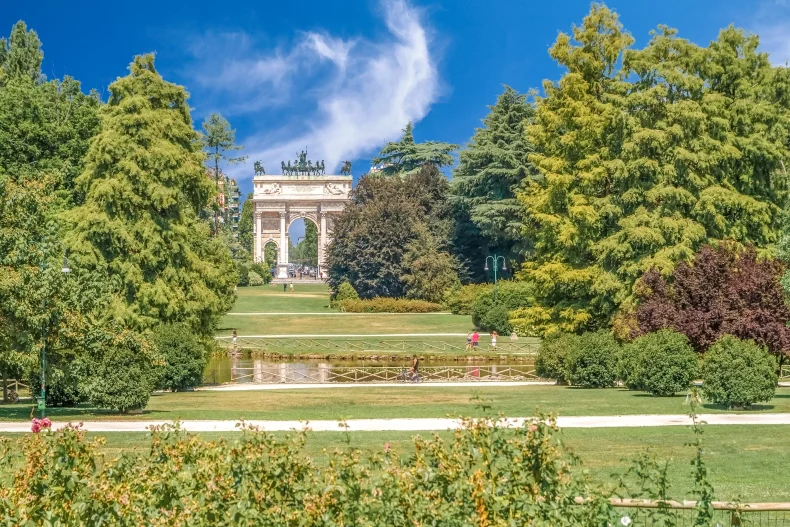
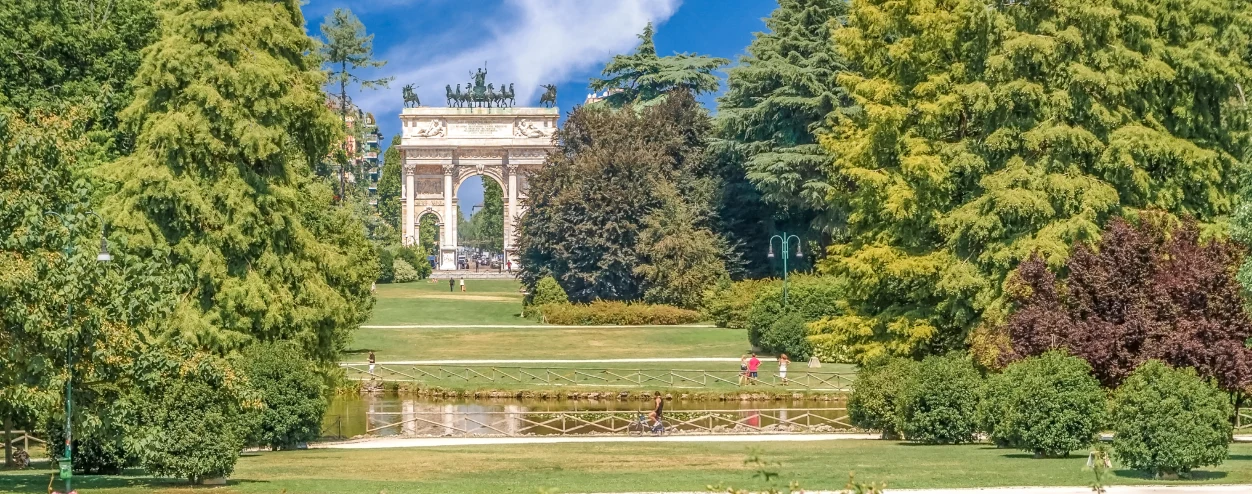
Parco Sempione is a large public park less than a mile from Duomo di Milano. The park links several key landmarks from different periods of Milan’s history. At one end stands the imposing Arco della Pace (Arch of Peace); at the other is Castello Sforzesco (Sforza Castle), a 15th-century castle. In between them are Arena Civica Gianni Brera, a 19th-century stadium that's still in use, and Triennale Milano, a design and art museum. Each of these landmarks has a fascinating story.
Together, they tell the story of Milan’s history and its art and design heritage. Think of Parco Sempione as Milan's version of London's Hyde Park (on a smaller scale), with Arco della Pace taking the place of Marble Arch and Castello Sforzesco replacing Kensington Palace.

Parco Sempione is one of the best places to explore the city’s past in a relaxed setting. History buffs will find plenty to like here.
Arco della Pace: A Monument Shaped by Political Change
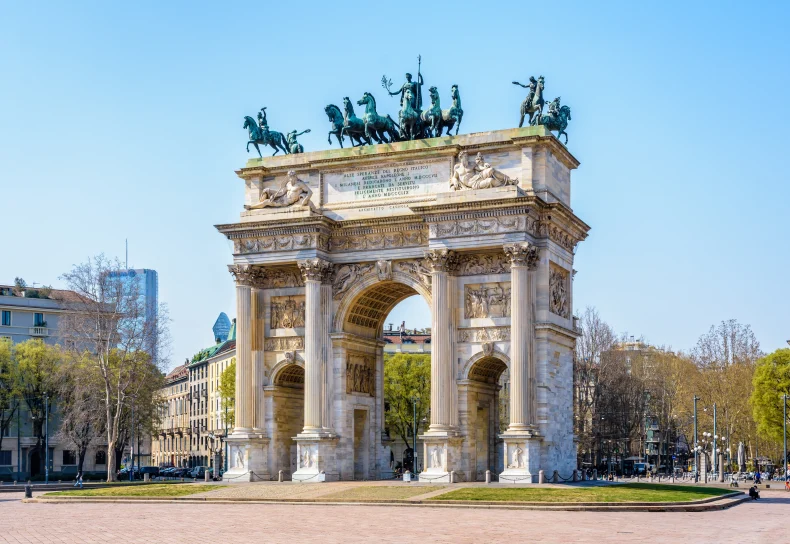
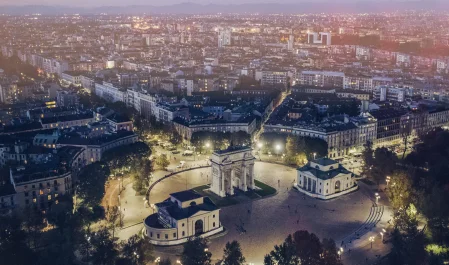
Arco della Pace, one of Milan’s most impressive monuments, stands at the northwestern end of Parco Sempione. The arch was commissioned during Napoleon's reign. It marked the route from Milan to Paris (starting from Corso Sempione) and reflected Napoleon’s vision for a new European empire.
However, Napoleon fell before the monument was finished, so the arch took on a new theme as a monument to peace instead of a symbol of imperial power.

A long central route connects the arch with Castello Sforzesco. This creates one of Milan's most striking views, best seen from Torre Branca, a 108-meter steel-frame observation tower in the park. The area around the arch is a lively gathering place, with an inviting atmosphere.
Corso Sempione, which is north of the arch, is lined with cafes and restaurants where locals and tourists can enjoy favorites like risotto alla milanese, authentic pizza, and cannoli. It's the perfect place to stop for lunch during a tour of the city.
Castello Sforzesco: Milan’s Renaissance Fortress
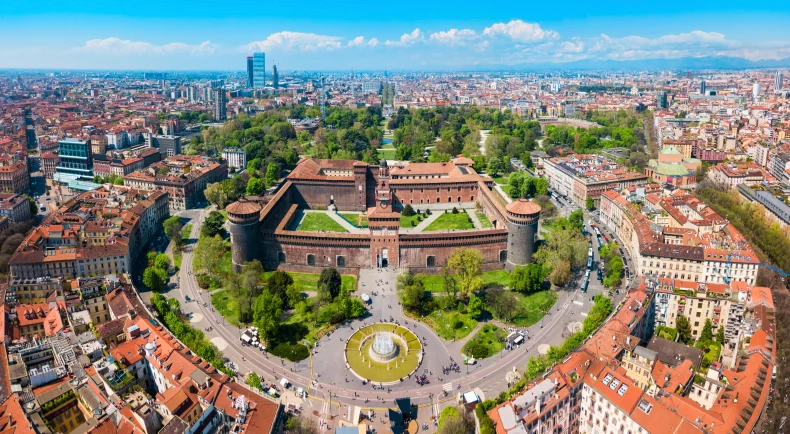
Castello Sforzesco is one of the city’s most important historic buildings and a symbol of the power of Renaissance Milan. The medieval fortress now houses a collection of museums, so it is a must-visit for art and history enthusiasts. Francesco Sforza, who became Duke of Milan in 1450, commissioned it on the site of a castle built by Galeazzo II Visconti (a former ruler of Milan).
Under the Sforza family, the castle was also a major Renaissance court. Famous figures who helped decorate the castle include Leonardo da Vinci and Donato Bramante.

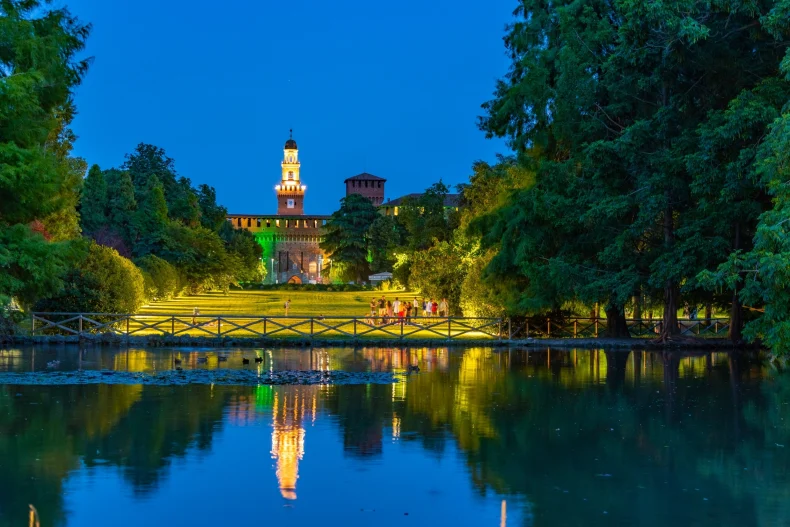
The castle's towers rise above the trees, while the open lawn gives visitors space to admire the full building. The dry moat adds drama to the structure, letting visitors imagine its role in defending the fortress in its heyday. It's best to approach the castle from the north side to fully appreciate its splendor.
Arena Civica Gianni Brera: Milan’s Historic Sports Arena
Arena Civica Gianni Brera is on the northern side of the park. The early nineteenth-century arena, designed by Luigi Canonica, is partly hidden by trees, so many visitors walk past without noticing it. Ancient Roman arenas inspired its oval shape.
Remarkably, it is still in use today. In 2002, it was named after Gianni Brera, a famous Italian sports journalist and writer. Although the events it hosts have changed, its main purpose has stayed the same. People continue to gather here for sports and entertainment.
Triennale Milano: A Center for Italian Design
On the western side of Parco Sempione stands the Palazzo dell’Arte, home to Triennale Milano. Giovanni Muzio designed the building, commissioned to house exhibitions of art, architecture, and design.
Triennale Milano is an important part of the city’s rise as a global center for design. Its exhibitions bring together artists, architects, and designers from Italy and abroad. Past exhibitions have included works by Giorgio de Chirico, Mario Sironi, Massimo Campigli, and Carlo Carrà.
Why Parco Sempione Deserves More Attention
Despite Parco Sempione's central location, many visitors don't see it as a major attraction. Some cross the park quickly on their way to the castle. Others stop near Arco della Pace without exploring the rest of the park. This is a missed opportunity.

A walk through Parco Sempione offers a clear journey through Milan’s past, bringing together the city's history and culture like nowhere else.
Set-Jetting: Film & TV References

View the article image gallery