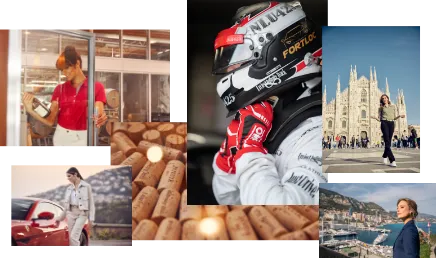






Milan brings together grand architecture, art, fashion, and everyday city life, with plenty to explore beyond the Duomo. Our team has visited Milan multiple times, filming at locations across the city. This guide draws on those visits alongside information on other sights and experiences to help you choose how to spend your time in the city.
For a first visit, start with the Duomo and Galleria Vittorio Emanuele II, then choose which art collections, churches, and neighborhoods interest you most. The guide begins with the main city sights before moving on to shopping, sporting attractions, and optional excursions beyond Milan.

Best Things to Do in Milan
Duomo di Milano

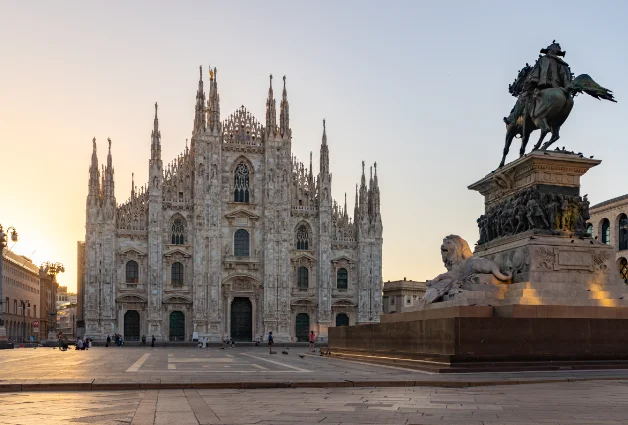
The Duomo is the top attraction in the city and one of the world's largest cathedrals. It can host about 40,000 people in its space of about 109,641 square feet. Its elaborate exterior is a great example of flamboyant Gothic architecture. Strolling through the building yields views of breathtaking stained-glass windows and ornate artwork. This exploration will likely be the highlight of your trip.
Locals often say you haven't been to Milan until you've visited Duomo di Milano. Also known as Metropolitan Cathedral-Basilica of the Nativity of Saint Mary, or simply called Duomo, it has a pull that draws people into the heart of the city. Visitors are often seen exploring the piazza at the base of the Duomo or enjoying the designer stores around it. If you only visit one place in Milan, it should be Duomo di Milano.
Galleria Vittorio Emanuele II

Galleria Vittorio Emanuele II, Italy's oldest active shopping mall, is located right next to Duomo di Milano. The mall is one of the city's most famous landmarks, offering top Italian designers and other global fashion brands.
The building is just as appealing as the clothing and other accessories in the different shops housing fashion's biggest names. The design is unique thanks to its octagonal shape, wrought iron decor, and domed glass ceiling. Its mosaic floor design represents different cities across Italy and is a piece of art by itself. If you plan to shop in Milan, this is the place to do it.
Naturally, a place with such architectural beauty is popular with filmmakers. The arcade's beauty featured prominently in the 2019 spy movie Anna, which also had a great night shot of the Duomo. More recently, its dramatic presence was featured in The Devil Wears Prada 2.
Piazza della Scala

Walking through the main walkway in Galleria Vittorio Emanuele II from Piazza del Duomo di Milano will take you to Piazza della Scala, a smaller square named after the Teatro alla Scala Opera House which is north of the square. Locals and tourists alike enjoy visiting the square to relax and admire the Leonardo da Vinci statue in the middle.
There are a few tourist attractions located around this square. The most interesting one is the opera house, which began operating in 1778. The first performance there was Antonio Salieri's Europa Riconosciuta. Teatro alla Scala also houses Museo Teatrale alla Scala, a theater museum with collections of paintings, statues, costumes, and other related exhibits which chronicle the rich history of the opera house.
Another interesting building close to the square is Palazzo Marino, a grand 16th-century palace designed by architect Galeazzo Alessi. The building, which currently functions as Milan's city hall, is named after Genoan merchant Tommaso Marino, who commissioned the building as his private residence. Following restoration efforts after the Napoleonic wars, the building became public property. It is now open for tours so visitors can see the impressive designs of the rooms of what was once a lavish mansion.
Santa Maria delle Grazie

Another church popular with visitors to Milan is Santa Maria delle Grazie. Compared to the Duomo di Milano, this church and Dominican Order convent may not look like much from the outside. However, it has something special within its walls that attracts tourists. The church is home to Leonardo da Vinci's famous work, 'The Last Supper'. The painting draws a large crowd of tourists, so don't be surprised if you see long lines during your visit.
Even if long lines don't bother you, don't take seeing the painting on the day you visit for granted. Tickets for viewing it often sell out, so you should consider making your purchase in advance.
Arco della Pace

Located along Corso Sempione, on the north-west side of Parco Sempione (one of Milan's largest public parks), Arco della Pace was built to complement Arc du Triomphe under Napoleon's short-lived rule from 1802 to 1805. The arch is a fine example of Milan's neoclassical architecture.
Originally constructed to celebrate Napoleon's victories, the arch was modified before it was completed long after Napoleon's defeat. Today, it's a symbol of peace, where you can enjoy the soothing sound of trams going by. There are also plenty of restaurants along Corso Sempione where you can indulge in Italian cuisine. If you elect to eat outside (and you should), look out for the pigeons. They're not afraid to snatch your pizza right out of your hand. Some of our team members learned this the hard way.
Castello Sforzesco

Built as a fortress back in the 15th century by the Duke of Milan at the time, Francesco Sforza, Castello Sforzesco (Sforza's Castle) now hosts many of Milan's museums and art collections. These include The Museum of Ancient Art and The Egyptian Museum.
While it operated as a medieval fortress, it saw updates in the 16th and 17th centuries and became one of the largest citadels in Europe. Situated east of Arco della Pace, Castello Sforzesco is one of Milan's most imposing landmarks. It's in the middle of an arc of buildings constructed around it as if to secure it further. It also has a beautiful fountain, Fontana di Piazza Castello, right by the east gate below the central tower named Torre del Filarete.
Walking from the Parco Sempione, a public park that sits between Arco della Pace and the castle, a bridge over the now dry moat welcomes you onto the grounds. The imposing building, along with its massive corner towers, gives the impression that it's still guarding something of immense value between its walls. In fairness, considering the art collections and the museums it hosts, you could say that it is doing just that.
Pinacoteca di Brera

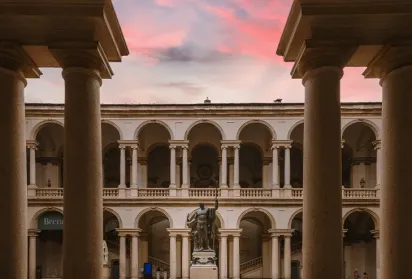
A few blocks east of Castello Sforzesco stands Pinacoteca di Brera, a 'must-visit' gallery for art lovers. The Baroque period building houses Italian and foreign art from the 13th to the 20th century. The gallery opened in 1809 during the reign of Napoleon Bonaparte, with the original collection amassed through political action by the government. It has since been expanded through exchanges, donations, and acquisitions. Prominent donors include the Vitali and Jesi families of Milan.
Some of the masterpieces in the Brera Collection include Andrea Mantegna's 'The Dead Christ and Three Mourners', Francesco Hayez's 'The Kiss' and 'The Finding of the Body of Saint Mark' by Jacopo Robusti. The gallery is also actively involved in restoration projects funded by different donors.
The art gallery also has a photography library showing off reproductions of Italian and foreign works of art and monuments. The photographs can only be viewed by appointment, so plan accordingly before your visit.
Quadrilatero della Moda

If you'd rather avoid the large crowd at Galleria Vittorio Emanuele II, you'll be happy to know you have options. Quadrilatero della Moda (fashion quadrangle), the main shopping district in Milan is in the city center a few blocks north of Duomo di Milano.
This part of town, which comprises streets including Via Sant'Andrea, Via Monte Napoleone, Via Pietro, and Via Gesu, offers the top brands in fashion, jewelry, and fine timepieces. Fashion brands present here include Stefano Ricci, Versace, Louis Vuitton, and a host of global jewelry brands like Cartier, Bulgari, and Sabbadini. It's not unreasonable to claim there's no global fashion brand that isn't represented here.
If shopping is the main goal of your Milan visit, staying at the Four Seasons Hotel on Via Gesu is a good choice as it will give you the freedom to shop as often as your budget allows.
Milano Centrale

Milan has a great underground rail network, so getting around should be easy. But when it comes to train stations, the Milano Centrale steals the show. With its imposing archways and vaulted ceilings, Milano Centrale (also known as Stazione Centrale) isn't just any station. It seems to transform into another of Italy's grand baroque cathedrals, except the station is not even 100 years old. Fans of the Netflix movie Murder Mystery may also find additional motivation to visit this station, knowing that it was the location where the couple boarded the Orient Express train close to the end of the film.
In addition to providing transportation to different parts of Italy, Milano Centrale also houses many high-end retailers and various eateries, from snack shops to fine dining restaurants. You should plan for some time to look around before embarking on a trip out of Milan.
Ferrari Store

Milan may not be the home of Ferrari, but the exotic carmaker has a strong presence in the city. Located close to the Duomo, the store is an immersive Ferrari experience. Naturally, visitors will find the latest Ferrari merchandise here to fulfill the desires of their inner Tifosi. In addition, authentic Ferrari racecars are on display. Customers can climb into the available Formula One simulators and experience what a Formula One car's cockpit feels like and enjoy a simulated drive on five different racing circuits including Monza, Imola, and the notorious Nürburgring. It is a great picture opportunity and will likely fill friends with envy when they view the photographs on Instagram.
San Siro Stadium

As in most European countries, soccer is very popular in Italy. Milan is home to two of the most famous soccer teams in the world, Inter and AC Milan, both of which play their home games at San Siro Stadium. It is one of the largest stadiums in Europe, with a capacity of just over 80,000. The stadium is also known as Giuseppe Meazza Stadium in honor of the famous Italian soccer player and manager who played for Inter Milan for most of his playing career.
Soccer fans can take advantage of the available guided tour and museum to learn more about this storied stadium that has hosted soccer matches in multiple FIFA World Cup tournaments and UEFA Nations League finals. Private tours are also available if you need to soak in the atmosphere in private.
The stadium was completed in 1926, so as you can imagine, there's a desire to build a new one despite the renovations that have kept the place relatively fresh. It is scheduled for demolition after the opening of a new stadium in 2031.
Navigli District

The Navigli district is home to the city's canals. The five canals here were originally built to connect Milan to nearby lakes for irrigation and navigation. Today, you can book a guided tour, which includes a boat ride on one of the canals. The tours help you learn about the district's rich history while exploring famous landmarks such as the former city gate of Milan, Arco di Porta Ticinese, and the historic public laundry, Vicolo Dei Lavandai.
We filmed Navigli during our last visit, and sadly the canals have lost some of their appeal. However, its historical relevance remains intact, but you shouldn't consider it a stop you need to make.
Trips beyond Milan
Puresport Driving Experience

Monza is about 45 minutes from Milan. Its most exciting attraction is the Autodromo Nazionale Monza (home of the Italian Grand Prix) where Puresport offers visitors an opportunity to drive open-wheel race cars or supercars on the full configuration of the circuit. Visitors can take control of the Arrows A18 Formula One car driven by world champion Damon Hill during the 1997 season. Alternatively, Formula Three cars are available as well. The circuit is known to be the fastest track on the Formula One calendar, and visitors can zoom around it as fast as they dare.
For a racing fan, nothing could be better than driving a Formula 1 car at the 'Temple of Speed', as the Monza circuit is known. It's easy to picture yourself as a professional racing driver. Puresport provides all the safety gear, helmets, racing suits, boots, etc. All you need to bring is your enthusiasm.
Lake Como

Lake Como is a short train ride or drive from Milan, so you would be doing yourself a big injustice if you leave Milan without visiting the lake.
A popular activity with visitors is visiting some of the towns around the lake, like Bellagio, Como, and Lenno. With a surface area of 56 square miles, travelers can take their time exploring the region's natural beauty.
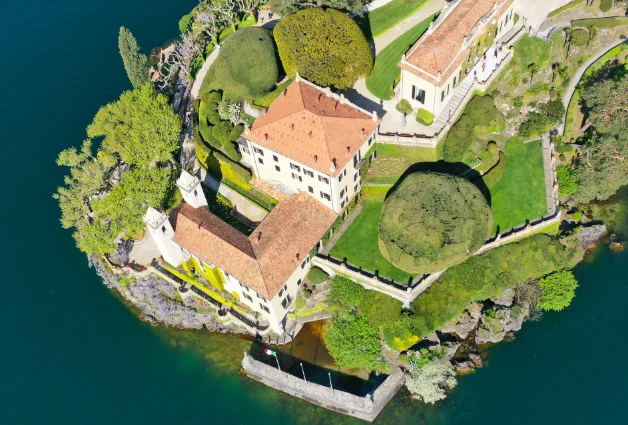
Take advantage of one of the many boat tours, which include visits to the best villas around the lake. Villa del Balbianello is arguably the most popular as it was the venue of the fictitious wedding between Anakin Skywalker and Padmé Amidala in the movie Star Wars: Episode II Attack of the Clones. The villa also happens to be a very popular wedding venue in real life. For more on this beautiful lake, see our page on Lake Como.
Bernina Express Train Tour
The Bernina Express Train Tour takes visitors into the Alps and away from the busy city of Milan in just a few hours. The train is the perfect way for travelers to see a different side of Italy. It travels through the countryside and exposes passengers to mountains, glaciers, valleys, and forests. The journey ends in the gorgeous winter resort town of St. Moritz. This destination is a perfect Alpine spot to spend a day or two before heading back to Milan.
FORTLOC Milan Tour - The best places to visit in Milan
Airport
Transportation
- Bus: Three bus companies operate at the airport. The Malpensa Bus Express (Autostradale) is the most convenient option. A journey to the city center takes about an hour.
- Taxi: Several taxi companies are available at the airport and easily reachable by phone or through the MiT app.
- Train: The Malpensa Express airport service connects Malpensa Airport to the center of the city. Trains operate 7 days a week.
Ride Hailing
Uber, Blacklane, MiT, Free Now
Popular Local Cuisine
Risotto alla Milanese

Northern Italian cuisine is different from its neighbors to the south, and Milan's most famous dish is an example of those differences. Risotto alla Milanese is a specialty dish of the region as the Po Valley in Italy's north is one of Europe's leading rice producers. Rice, of course, is a key ingredient in any risotto and Milan's dish is no exception.
The Milanese chef, Felice Luraschi, gave the dish its official name in 1929, but the dish originally appeared in cookbooks as far back as 1809 under the name 'riso giallo in padella.' Luraschi changed a few details of the recipe with the current Risotto alla Milanese dish containing rice, fat, beef marrow, saffron, nutmeg, and stock. Grated cheese is added to the dish for additional flavor.
Best Time to Visit
You can't visit Milan without visiting the Duomo di Milano. Yet, if you go to Milan in the summer, this part of the city will be so crowded that you're not really going to enjoy your visit. To make matters worse, the summer months can be very hot. On the other hand, mid/late spring is warm, but there is a high chance of rain. It's better to go in early fall. The crowds are a lot thinner, and the weather is still warm. Fall is also when Women's Fashion Week comes to town. Book early if you plan to visit at the time of this event.
Historical Weather by Month
Milan, Italy
Where to Stay

Set-Jetting: Film & TV References