




Sevilla (known as Seville in English) is located in Spain’s southern Andalusia region. It is the fourth-largest city in Spain and offers travelers a variety of things to do in and around it.
Over 2 million people visit the Sevilla province each year, with many tourists heading to the city to enjoy its numerous tourist attractions.
The city is enchanting with its beautiful streets and palm trees that dot it. Sevilla has an atmosphere that is far different from that of other big cities in Spain. History buffs and sightseers will find a nearly endless array of places to visit and things to do in Seville, including world-famous landmarks showcasing Spanish culture. Examples of these are Catedral de Sevilla, Acuario Sevilla, and the Real Alcazar.
Best Things to Do in Seville
Watch a Flamenco Show

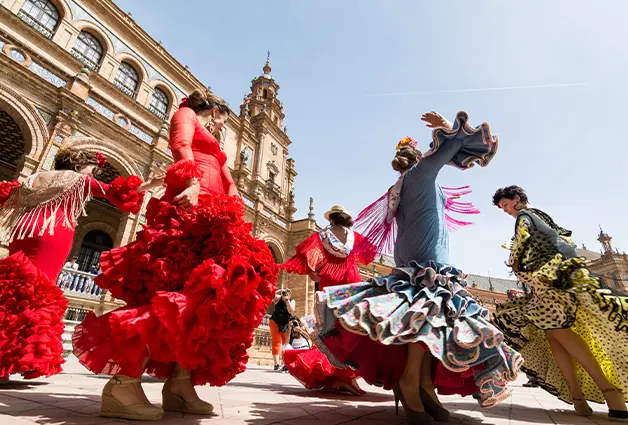
After arriving in Seville, your first port of call should be to watch one of the city’s famous flamenco shows. If you’re unfamiliar with the term, it’s a Spanish dance with origins in the Gitano subculture of the Andalusia region of Spain. You can find shows all over the city, but some top venues include T de Triana, Casa de Flamenco, and Mantoncillo.
Also called tablaos, these venues offer hour-long shows where the city’s most talented flamenco dancers entertain audiences, along with live music. Food is also often available, allowing you to make a whole evening of it.
Some tablaos are available outside tourist hotspots, offering smaller, more intimate shows. Expect the experience to go on all evening.
Parque de María Luisa

Parque de María Luisa, a stunning public park along the Guadalquivir River, is an oasis of peace, offering leafy shaded walkways and gently trickling fountains. Compared to the hustle and bustle of Seville's streets, it allows you to slow down and take a break from your sightseeing tours. The park's relaxing atmosphere has made it a popular destination for tourists and locals alike. You can take a stroll, relax on the lawn, or enjoy river views from various vantage points.
It is right next to Plaza de España, so you have an additional reason to visit the park. There is also a small hill called Monte Gurugú with a monument dedicated to Christopher Columbus.
Guadalquivir River Cruise

A Guadalquivir River Cruise is another activity to consider during a trip to Seville. The mighty watercourse takes you through the city's historic heart, giving you a unique vantage point to enjoy its diverse history.
Most cruises last sixty minutes and take you to prominent landmarks like Plaza de España, Torre del Oro (The Tower of Gold), and the Triana Bridge. Some operators will also take you past the Palacio de San Telmo, a building that exemplifies the finest aspects of the Sevillian Baroque architecture. Tour guides provide live commentaries in several languages (including English), helping you absorb Seville's history and culture. Boats have plenty of shade but can be cramped in peak season.
Museo de Bellas Artes (Museum of Fine Arts)

The Museo de Bellas Artes is another destination that should be on your Seville shortlist. As one of the most prestigious in Spain (second only to Madrid's Museo Nacional del Prado), it houses works of art from the Middle Ages, Renaissance, and Baroque eras.
The museum is housed in a building which used to be the home of the convent of the Order of the Merced Calzada de la Asunción. It is located west of Plaza del Museo, a public space with a large statue of famed Spanish painter Bartolomé Esteban Murillo. The statue is obscured by the trees around it, so you could easily miss it.
Museo de Bellas Artes visitors often go to the museum to see the work of Spanish artists such as Francisco Zurbarán, Valdés Leal, and José García Ramos. Beyond the prized art on display, the building's elaborate architecture and attractive internal courtyards alone make the museum a worthy place to visit. Plaza del Museo also happens to be a peaceful place that's perfect for a break from your tour of the city.
Torre del Oro

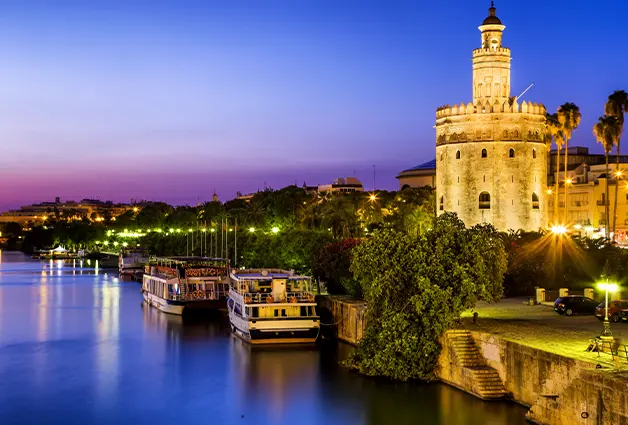
The Torre del Oro is a must-see on any Seville trip. The towering structure symbolizes the city's history, adding depth and character to the cityscape.
The Almohad Caliphate built the structure in the 13th century to control Seville and the surrounding region along the Guadalquivir River. However, the origins of its name, "The Golden Tower," remain controversial. One theory says it is a reference to when former Latin American colonies brought gold to Spain's shores via the building. Others believe it refers to how the original lime, mortar, and pressed hay rendering reflected in the river water.
The Torres del Oro now houses the Naval Museum of Seville. Visitors can browse various exhibits documenting the region's maritime history or climb to the top of the tower and look out over the rest of the city.
Catedral De Sevilla

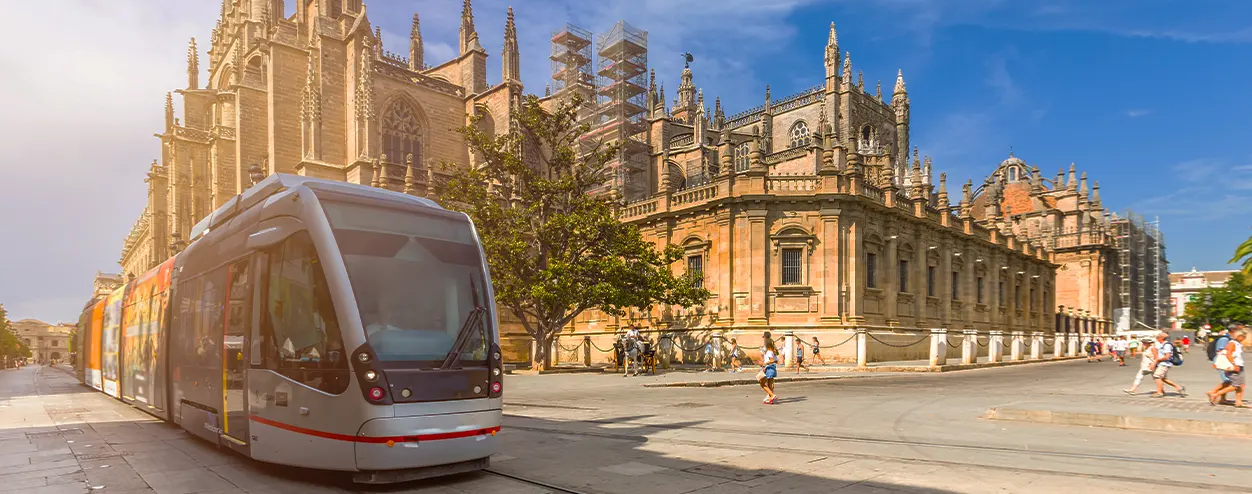
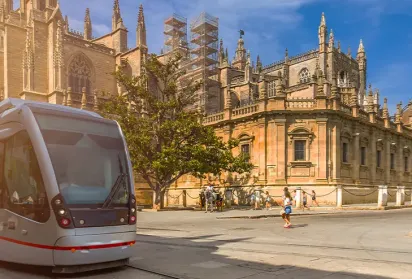
Catedral de Sevilla (also known as Catedral de Santa Maria de la Sede) is a UNESCO World Heritage Site. The structure is the largest Gothic cathedral in the world, boasting the most extensive internal space of any building of its kind.
Work began on the awe-inspiring cathedral in 1401 on the site of an old mosque and continued until 1519. Taking a look at its bell tower, intricate facade, and spires, it's easy to understand why the construction of the cathedral took that long.
The cathedral has 80 chapels, with Capilla Mayor being the main one. Capilla Mayol has a 36m high vaulted ceiling and a masterfully crafted 30m by 20m retablo. The silver and alabaster altarpiece adds an elegant touch to the chapel's stunning appearance. You'll also find the elaborately decorated tomb of Christopher Columbus here, along with the Giralda, the 104.5m bell tower built around the minaret from the mosque that previously occupied the site.
Metropol Parasol

Located in the old quarter, the Metropol Parasol is a structure made up of six wooden parasols that form a large mushroom shape. Tourists will find the Antiquarium, Central Market, and a restaurant located at the venue. There is a panoramic terrace located on levels two and three of the Metropol Parasol. Visitors will find some of the most amazing views of Sevilla’s downtown while sitting on the terrace.
Plaza de Espana

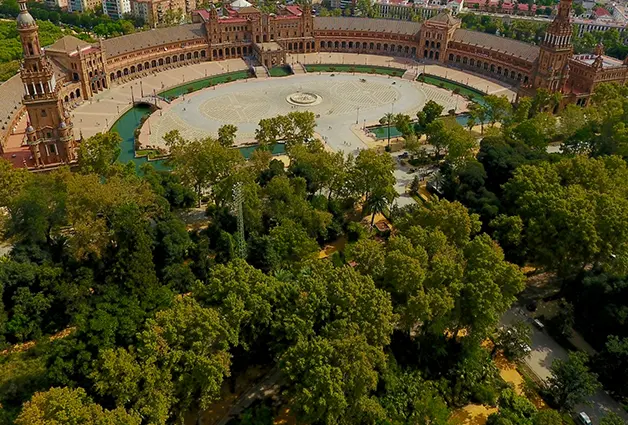
Plaza de Espana is situated in the Parque de Maria Luisa. The plaza is famous for its architecture which mixes several styles into one. Built in 1928, the plaza provides visitors with a beautiful place to stretch their legs on sunny days. Boat rides on the canal right by the Plaza de Espana offer breathtaking views of the building.
Many of the buildings in the park are used by government officials. The media have also used it for films, and numerous television shows have been shot in the Plaza de Espana. Star Wars: Episode II Attack of the Clones had scenes shot at the plaza.
Acuario Sevilla

Opened in 2014, the Acuario Sevilla, or Sevilla Aquarium, cost more than €8 million to build. Inside, visitors will find 35 tanks and more than 7,000 fish, reptiles, and sea animals. The most popular attraction is the one housing the aquarium’s bull sharks. Visitors can view the sharks via a walk-through glass tunnel that allows the two dangerous animals to swim around them. The aquarium is organized around Ferdinand Magellan’s famous circumnavigation of 1519. Visitors will be taken around the globe to see some amazing creatures.
Plaza Nueva

Set in the historic center and anchored by the elaborate Plateresque architecture City Hall building, Plaza Nueva is a good place to pause and observe life in Seville unfold. Completed in 1856, the plaza is one of the city’s most inviting public spaces, as it captures Seville's everyday rhythm well. Its broad open layout, lined with trees and edged by elegant buildings, gives it a calm, spacious feel.
Plaza Nueva is less about checking off a single attraction and more about atmosphere. It is worth lingering for the shaded benches, the steady movement of pedestrians and trams, and the easy access to shops, cafés, and the streets in the old center. The statue of Ferdinand III (who conquered Seville in 1248) adds historical character, while the square's central location makes it ideal for a 'pit stop' while exploring the city.
Real Alcazar

A former Moorish medieval fortress, the Real Alcazar is a protected UNESCO World Heritage Site today. It was built in the 10th century. The Alcazar is a wonderful example of Arab-Islamic architecture. Its high dome ceiling, ornate friezes, and carved scriptures offer a fascinating historical look into Sevilla's Moorish past. The gardens are glorious and provide visitors with a chance to explore manicured courtyards with fantastic fountains all around them.
Palacio de la Condesa de Lebrija

Palacio de la Condesa de Lebrija is one of Seville's most distinctive historic houses. Behind its understated exterior lies a richly decorated interior where Roman mosaics, and carved ceilings create a setting that's more atmospheric than a conventional museum. Built on the site of a 16th-century noble residence and later transformed by the Countess of Lebrija, the palace reveals a deeply personal vision.
The ground floor is especially striking for its remarkable Roman mosaics, while the upper spaces reveal a layered blend of Andalusian and classical influences. Located in the historic center, the palace is an appealing stop for anyone looking to step beyond Seville's most visited landmarks. It offers history, craftsmanship, and a strong sense of discovery.
Circuito Monteblanco
The Monteblanco Racetrack is located less than an hour outside of Sevilla. Monteblanco's Formula GT driving experience gives visitors the chance to get behind the wheel of Ferrari, Lamborghini, and Porsche supercars. The experience is carefully monitored by a highly knowledgeable instructor sitting next to the participant who offers expert advice while you burn rubber around the racetrack.
Airport
Transportation
- Bus: Operated by Urban Transports of Seville Municipal Corporation (Tussam), the exclusive EA bus line is the only bus line that connects Seville Airport with the city.
- Taxi: Seville city taxis charge a flat rate for all services between the airport and the city. They are available from just outside the terminal building.
Ride Hailing
Uber, Cabify, Blacklane, Free Now
Popular Local Cuisine
Carrillada de cerdo
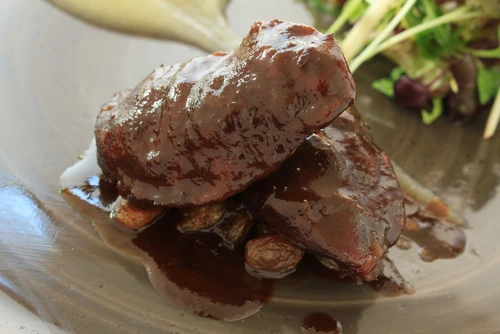
Seville is well-known for its tapas bars and restaurants. So, when out on the town, tapas bar hopping, be sure to order up a dish of Carrillada de cerdo. Carrillada de cerdo are pork cheeks made by stewing the meat in a wine reduction. Other ingredients may be added to the meat to add flavor.
Pork cheek is a rather lean cut of meat compared to other pork products. It is believed carrillada de cerdo is a more recent addition to local menus, possibly first being served up in the late 1970s. With a wide variety of tapas bars serving it, you can explore the city in an attempt to find the best recipe.
Set-Jetting: Film & TV References