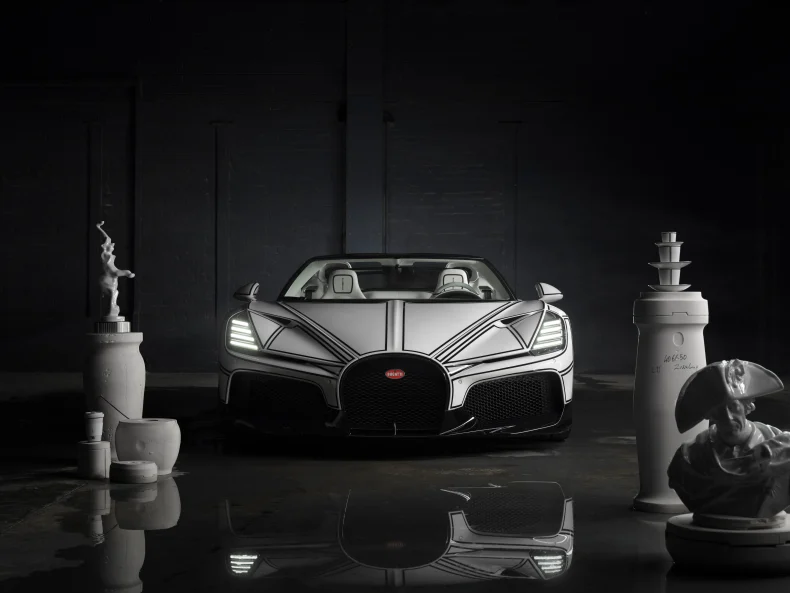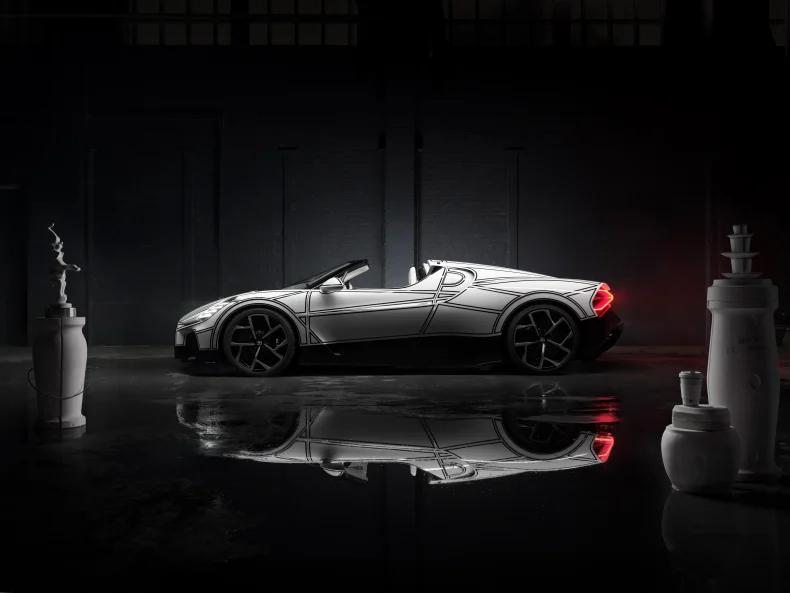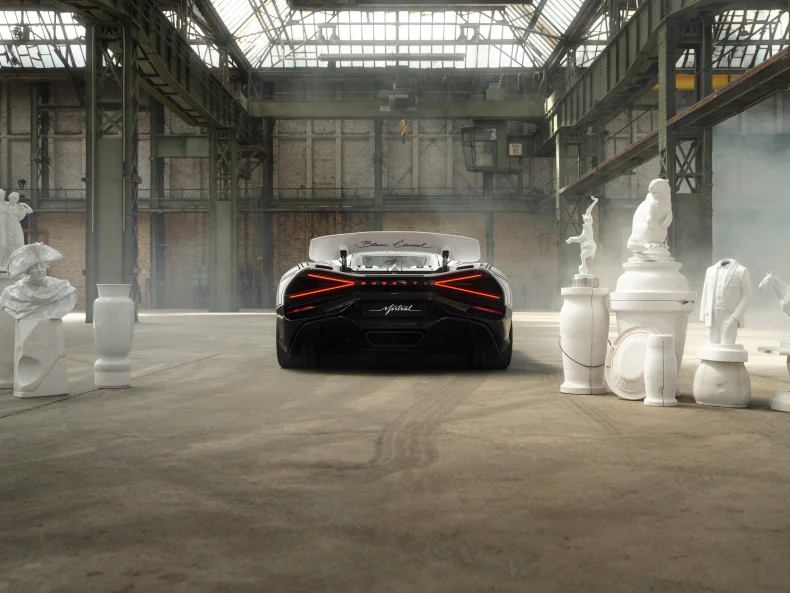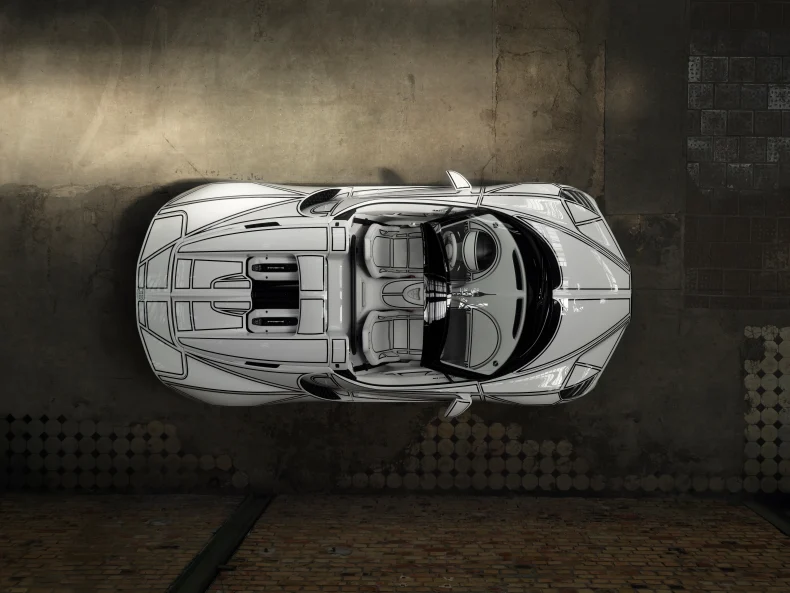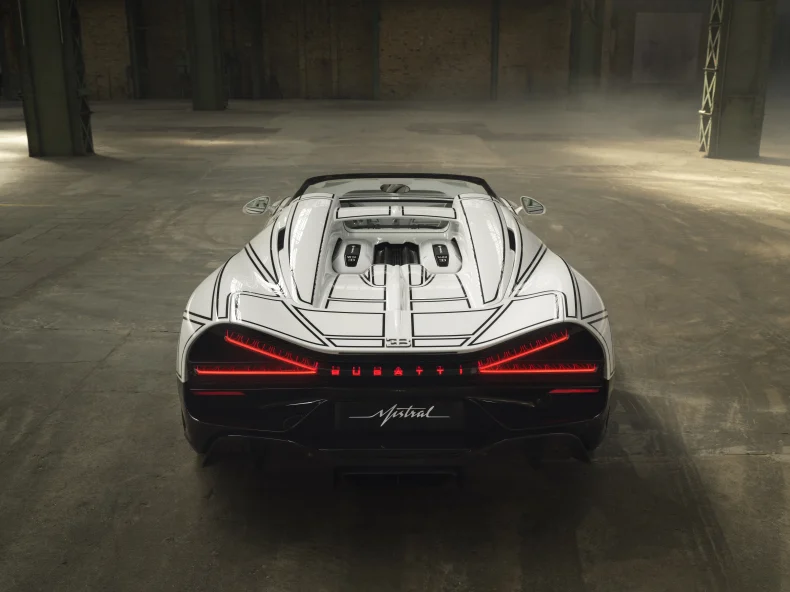
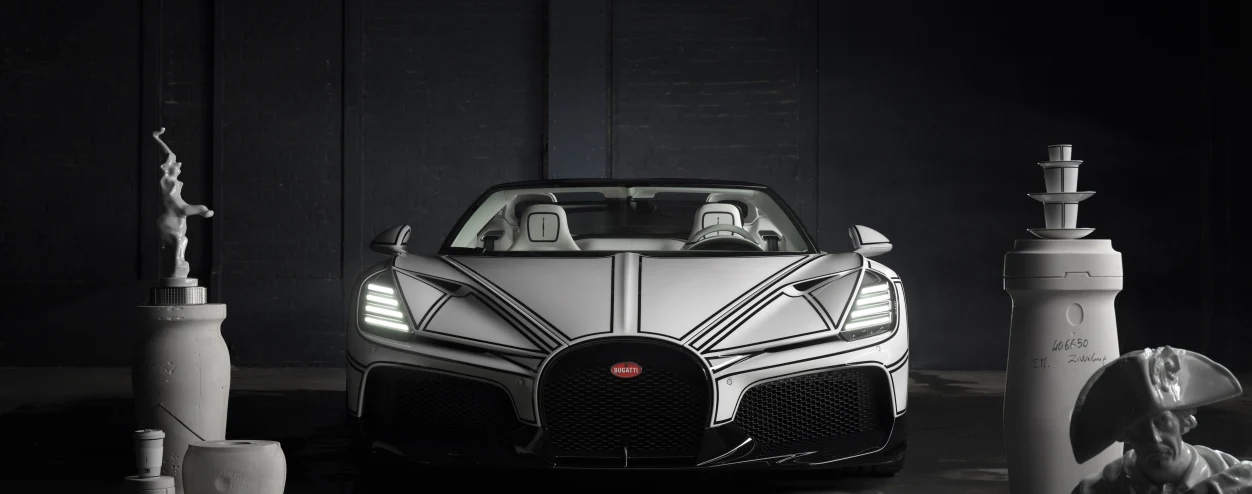




Bugatti’s W16 Mistral ‘Blanc Éternel’ is the marque's newest one-of-one. A car that pays tribute to porcelain (otherwise known as white gold) in what can only be described as an unmistakable way.
The story behind the car goes back 15 years to Bugatti’s partnership with German luxury goods maker Königliche Porzellan-Manufaktur (KPM Berlin). The fruit of that joint effort was ‘L’Or Blanc’, a porcelain-inspired version of the Veyron Grand Sport.
That was one of the first expressions of Bugatti’s take on personalized design, using flowing lines inspired by a white porcelain vase designed by modernist artist Enzo Mari for KPM. Those lines, as seen on the Veyron Grand Sport, echoed the reflections used by designers and quality specialists to read a car's surfaces.

Rather than simply recreating the reflection-line motif of ‘L’Or Blanc’, the teams pushed the envelope through the design language of the W16 Mistral. The roadster was developed through an entirely digital design process, with its form created from precisely controlled digital surfaces known as NURBS. For ‘Blanc Éternel’, that normally hidden digital surface becomes the bedrock of the car’s exterior finish.
The body is first finished in white, then carefully sanded. Each black line is positioned by hand before the surrounding areas are masked, the original tape is removed, and the exposed channels are sprayed in black. As you can imagine, a process like that requires patience and an understanding of how each line must move across the car’s surfaces.
The black-and-white composition highlights the W16 Mistral’s design elements, including the iconic horseshoe grille, rising C-line, air intakes and X-shaped taillight. The exterior also has porcelain details created with KPM, including the EB emblem, the fuel and oil caps, and two engine-cover inlays bearing KPM’s royal scepter logo.

Porcelain also plays a role inside the cockpit. The exterior’s linework is translated onto white leather through a new process, with leather sections prepared, masked by hand, and painted black. Further porcelain elements appear in functional touchpoints, including the speaker cover plate and window-lifter buttons.
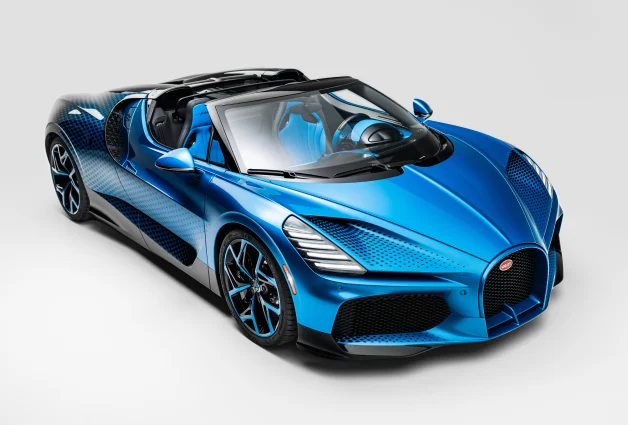
You could describe the finished product as an acquired taste, as some would say the finishing doesn’t quite work on the Mistral. However, none of that matters for a one-of-one car. When it comes to those, only one opinion matters. But while we're on the subject, let's just concede that it looks way better than the ‘L’Or Blanc’ Veyron.
Bugatti Design Director Frank Heyl (who also worked on the ‘L’Or Blanc’ Veyron) sees the ‘Blanc Éternel’ as honoring the previous car and the W16 Mistral's digital design language. KPM Creative Director Thomas Wenzel described the combination of porcelain and hypercar performance as a creative challenge. It's hard to argue against that.

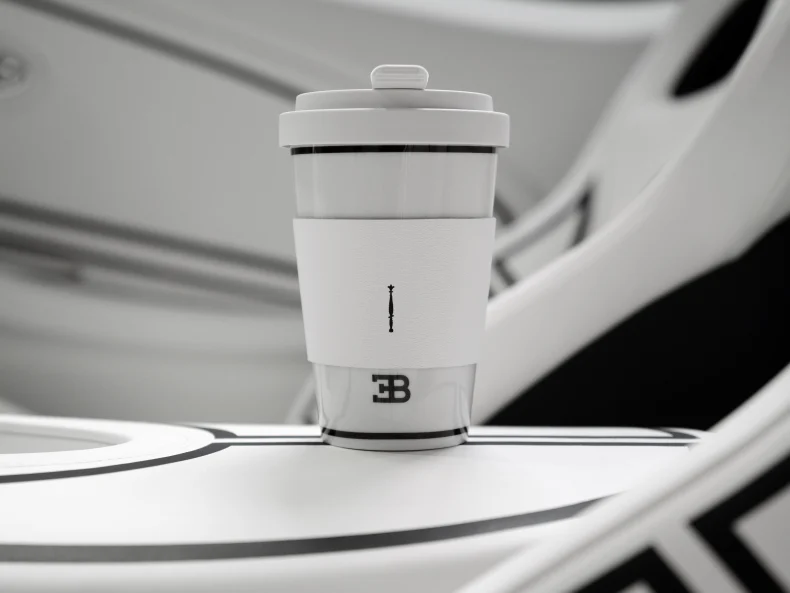
Bugatti and KPM have also created a limited-edition ‘Blanc Éternel’ porcelain collection inspired by the W16 Mistral. The collection includes the To-Drive Cup and KPM’s Aviator Cup in two sizes, limited to 1,000 handmade pieces.
As one of the final expressions of Bugatti’s W16 era, the ‘Blanc Éternel’ is a tribute to heritage, modern design and the enduring value of carefully curated art, shaped through the eyes of two maisons known for their relentless pursuit of precision and elegance.
View the article image gallery