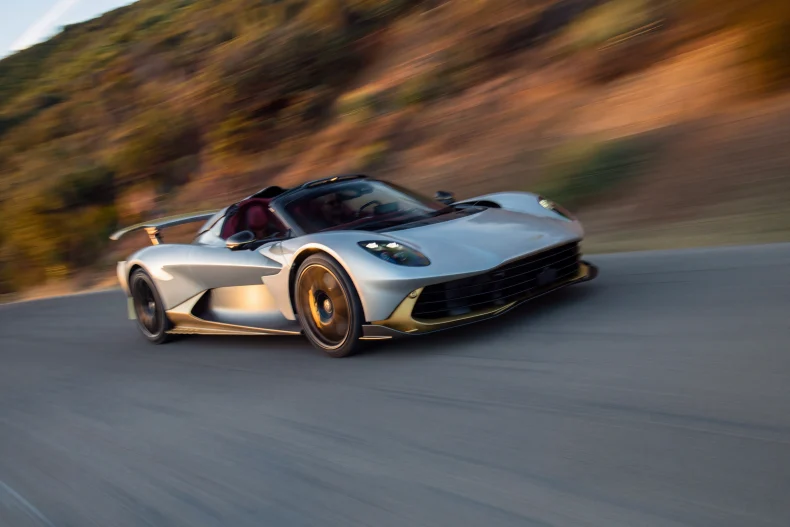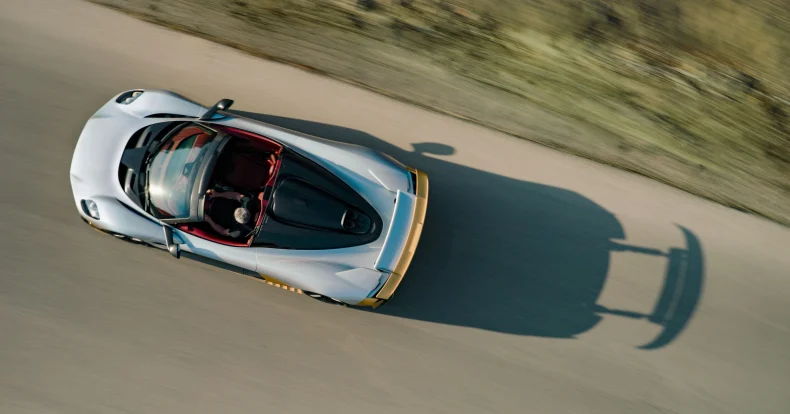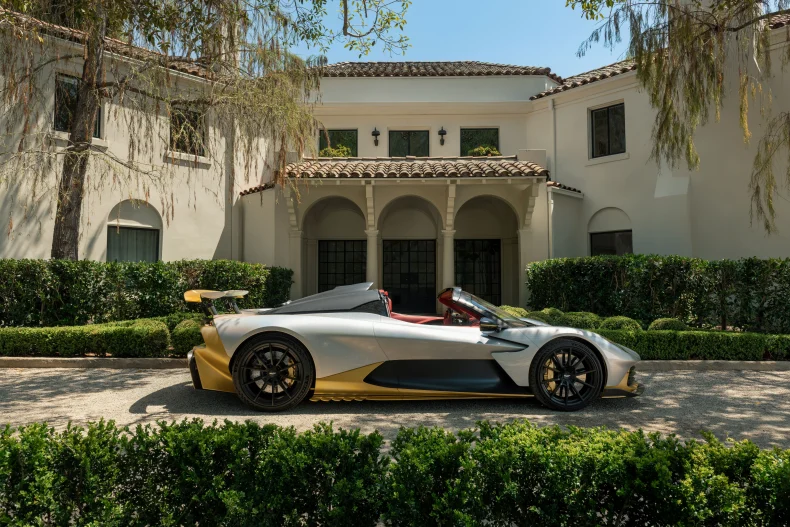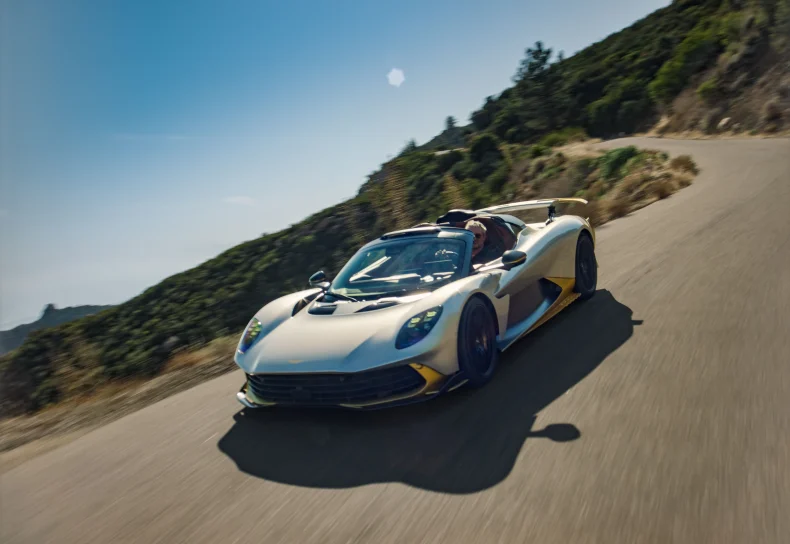
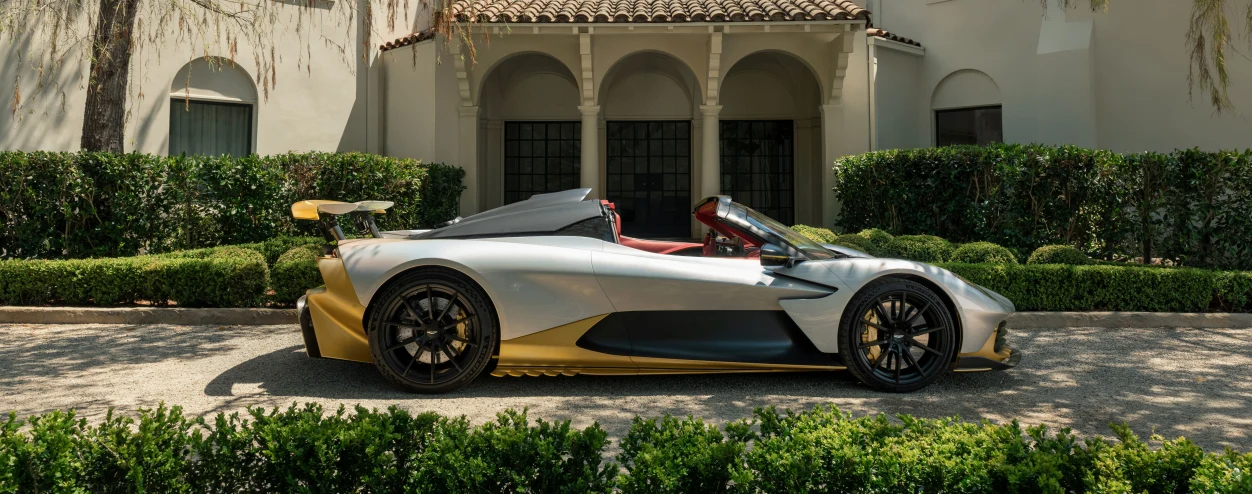




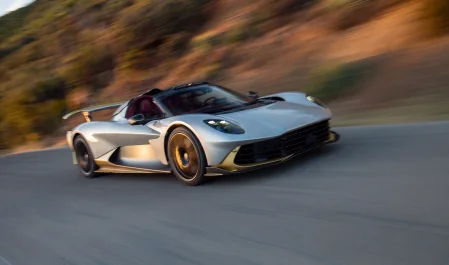
You knew it was coming. Following the coupe introduced earlier in 2026, Aston Martin's Valhalla Spider is its first mid-engined open-cockpit production car and the fastest open-top in the British marque's history.
The Spider combines advanced hybrid engineering, Formula 1-derived technology, and a removable roof, a combination that should make it ideal for exploring scenic back roads.
With a top speed of 217 mph (350 km/h) and a combined output of 1,079PS (1,064 bhp), the Valhalla Spider is engineered to deliver great performance on both road and racetrack (how else are you going to verify that top speed?).

With the standard fabric roof (for most markets), the car reaches speeds of up to 124 mph (200 km/h) when fitted. An optional carbon-fiber hardtop enables the car to reach its electronically limited top speed of 217 mph (350 km/h). Keeping that in mind, you have to wonder why anyone would want the fabric roof. Luckily, on this side of the pond, the carbon-fiber hardtop is standard.
Hybrid Power and Advanced Aerodynamics
At the heart of the Valhalla Spider is a plug-in hybrid powertrain that combines a bespoke 4.0-liter twin-turbocharged V8 engine producing 828PS with three electric motors that add 251PS. That offers a combined 1,079PS and 1,100 Nm of torque. 0- 62 mph (100 km/h) time is listed as 2.5 seconds.
Two electric motors power the front axle, providing Electric Torque Vectoring for improved agility and stability. The third motor is integrated into the eight-speed dual-clutch transmission and assists the V8 in driving the rear wheels.

The spider also retains the coupe's active aerodynamic system, which adjusts front and rear downforce to optimize grip and handling. With the roof fitted, it can generate more than 600 kg of downforce.
The Valhalla Spider has four selectable driving modes: Sport, Sport+, Race, and EV. These allow drivers to tailor the car's performance to align with their driving preferences.
Carbon-Fiber Construction and Interior Refinement
Like the coupe, the Valhalla Spider features a lightweight carbon-fiber monocoque (another feature borrowed from Formula 1). Its distinctive dihedral doors now incorporate frameless glass and refined mechanisms for smoother operation.
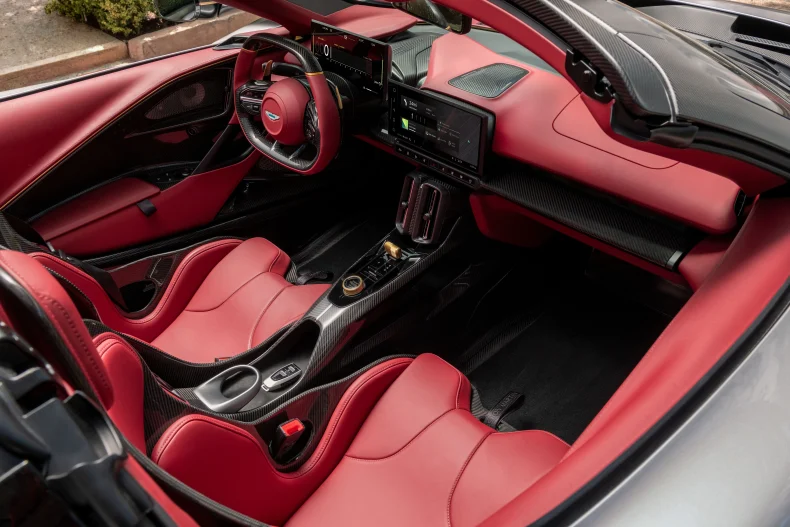
Inside, new carbon-fiber Touring Seats come standard to improve comfort and accessibility. If that isn't desirable for some reason, buyers can select the coupe's original carbon-fiber seats at no additional cost.

The interior combines Alcantara upholstery with satin-finish carbon-fiber details, while personalization options include leather finishes, exposed carbon-fiber elements, and upgraded Bowers & Wilkins audio. That audio upgrade should come in handy for those touring drives.
Whether you intend to use it to explore scenic back roads or save it for track days at your favorite local track, the car appears to be ready for whatever you throw at it. Customer deliveries are expected to begin in the third quarter of 2027, to introduce a new open-top expression of Aston Martin's hybrid supercar engineering.


View the article image gallery