



There exists a seat in Formula One that is somehow both coveted and feared. A drive that many dream to reach but has repeatedly hurt those who stepped into it. Being Max Verstappen's teammate is the epitome of being careful of what you wish for, where expectations become sky high, and your career sits on a knife edge.
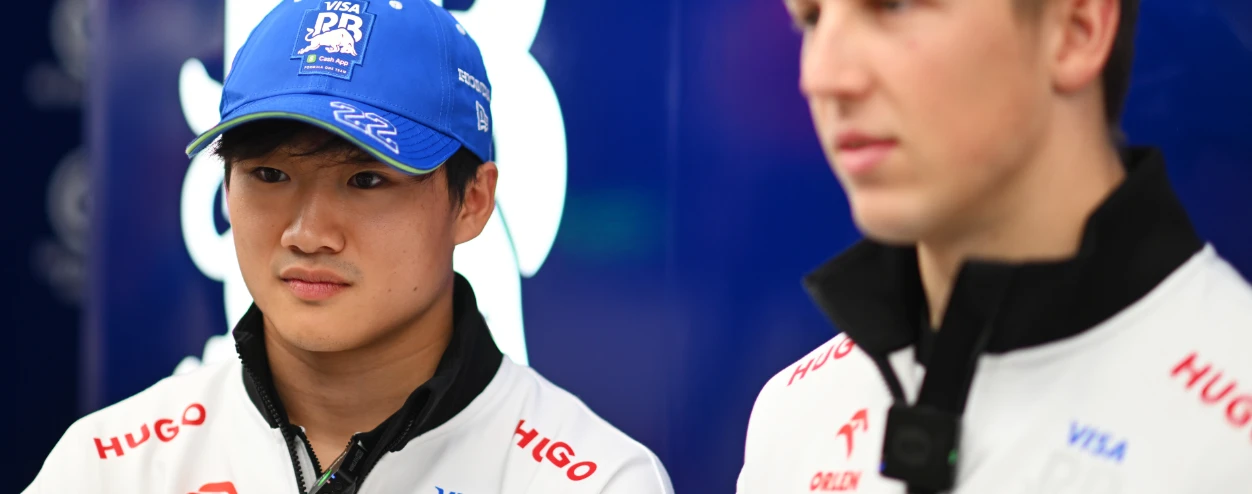
Liam Lawson, not Yuki Tsunoda, has the unenviable yet oddly desirable job of being that Red Bull Racing driver for 2025. On paper, it's a bizarre choice for one of F1's top teams to recruit a driver with only 11 grand prix starts to the top when someone nearly eight times more experienced has waited four seasons for the opportunity. However, F1 is an unusual sport that lives by facts, figures, data, and statistics for so much, but not driver recruitment. For that, there's politics.
Red Bull's Lawson promotion to the hot seat suggests the truth about Tsunoda is that he would never reach Red Bull. It's not Tsunoda whose future will hang on how far behind Verstappen he is in 2025. That could seem a relief by some metrics, yet Lawson and Tsunoda face an uncertain future, irrespective of who climbed up to Red Bull Racing.

Honda's F1 History
Let's step away from 2025 and rewind the clocks for four decades. 1987 saw the launch of Red Bull as a brand five years after founder Dietrich Mateschitz visited Thailand, where he learned the power of energy drinks. It was also the second successive season that the Williams F1 team took the World Constructors Championship. Nigel Mansell and Nelson Piquet drove the FW11 and FW11B to 18 victories from 32 rounds over the '86 and '87 seasons. But Williams' fortunes were about to change.
Honda had powered the British team since 1984 as their first full-season foray as an F1 engine supplier. It only took three years before the partnership blossomed into regular victories and success for Frank Williams' team. The Williams-Honda force looked unstoppable. Yes, Team Lotus also benefitted from the Japanese engine supply in 1987, but they only had Ayrton Senna as the talent, with the other drive occupied by rookie Satoru Nakajima.

Honda, a Japanese brand, wanted to power a Japanese driver in the sport. Nakajima, their test driver, was the name they pushed, and he didn't impress much alongside the growing talent of Senna, who was picking up regular podium finishes. Undeterred, Honda pushed for their nation's representative to replace Mansell for the 1988 season. Williams refused to home Nakajima, and Honda switched their primary supply to their British rival, McLaren.
That flashpoint changed the sport, with McLaren subsequently storming to four consecutive constructors titles. Meanwhile, at Williams, the loss of Honda left them in a freefall from grace. Back-to-back championships morphed to P7 in the standings, with Mansell retiring from 12 of the 14 grands prix he contested in 1988. They'd later recover to the top with Renault power in the 90s, but they spent years in the doldrums because of their soured Honda relationship.
The Power of Dreams

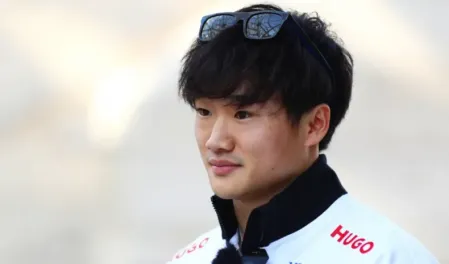
Tsunoda is not Nakajima, just as the quality of F1 drivers in the modern era is much higher than in the 1980s. Yet, the political chess hasn't changed. Tsunoda may be a better driver than Nakajima, but Red Bull's decision to overlook the 24-year-old driver shows he's always been a pawn in the Red Bull-Honda game. Tsunoda has lasted longer than some other Red Bull juniors who reached the top, but the Honda logo on his overalls looks to be why.
Honda has backed Tsunoda since 2016, and the man from Kanagawa Prefecture had his life change when Red Bull and Honda joined forces. 2018 saw Honda power Toro Rosso ahead of Red Bull taking the same engines in 2019, and Tsunoda promptly joined the Red Bull Junior Team. That's not to say he wasn't deserving of an F1 team's academy program, but the timing of Red Bull, not another team, picking him up speaks volumes.
Everyone had what they wanted by 2021. Tsunoda had reached F1, the first Japanese driver since Kamui Kobayashi in 2014 and the first Honda-backed driver since Sakon Yamamoto's partial 2010 season. Honda had Japan's flag flying in the sport, showing their Honda Formula Dream Project could take drivers to the top. Finally, Red Bull had a Honda engine that had them competing for championships. The crucial difference compared to Williams' 1988 nightmare was that they could placate Honda with a second team to place their Japanese delegate in.

End of an Era
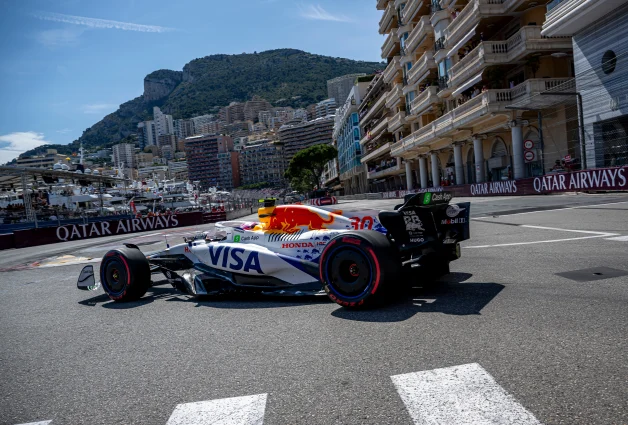
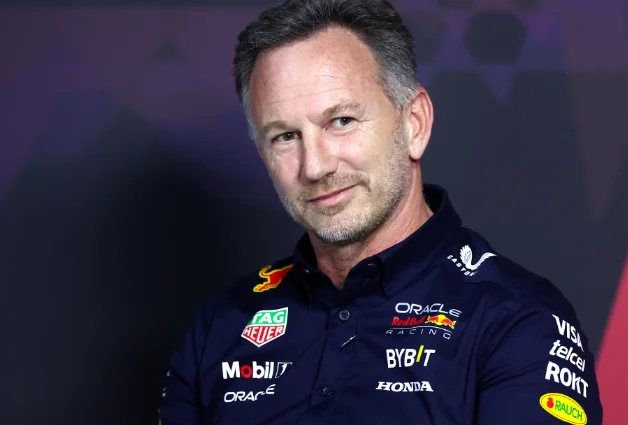
While Tsunoda was no doubt grateful for the opportunity to reach F1 five years ago, he now sits in limbo. He's done enough to demonstrate he's a competent racer, occasionally bringing his Toro Rosso/AlphaTauri/VCARB car to positions it looks like it shouldn't reach. But Red Bull's Team Principal, Christian Horner, doesn't think that his four seasons have shown he has the quality to sit alongside Verstappen at the top.
Honda led Tsunoda to the F1 stage, where he could show his capabilities. He's shown flashes of excellence, but never to the extent that Verstappen accomplished in his first F1 year. And that's the high that Red Bull has chased since getting the Dutch four-time champion in their fold. With Tsunoda coming alongside a Honda-shaped asterisk, Red Bull instead promoted the next driver in the queue for 2025.

It's far too soon to definitively state that Lawson has more talent, potential, or speed than Tsunoda. But it doesn't matter who the superior driver between the pair is. Neither is awful and both could support Verstappen's quest for his next title. But one isn't there to placate their engine supplier, and that's the difference.
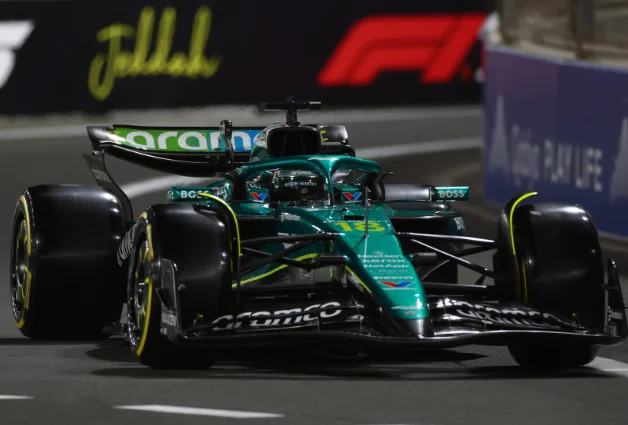
All this talk of politics can't be substantiated by this outside observation, but things will clear up in the coming years. Honda's flip-flopping on their F1 engine supply saw Red Bull move to Ford to partner with their Red Bull Powertrains project for 2026. It's now Aston Martin that benefits from Honda's focus on the incoming new regulations next season.
Should my theory that Tsunoda is more Honda's than Red Bull's man in the sport prove correct, why would Red Bull feel compelled to promote a driver for a partnership in its final year? Tsunoda might feel frustrated not to be a Red Bull Racing driver in 2025, but the real problem he faces is whether he'll be a Formula 1 driver in 2026.