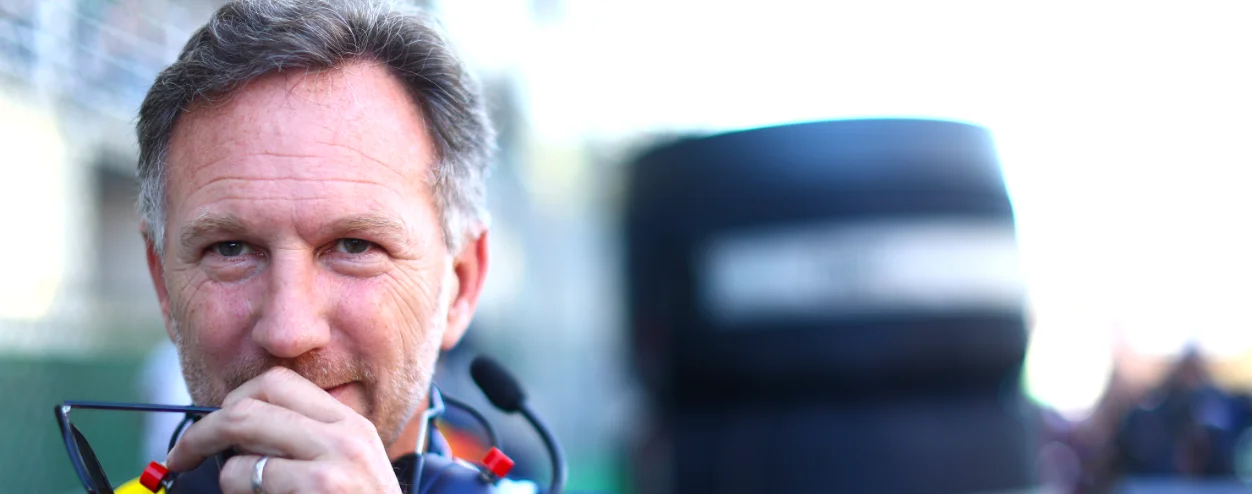




Christian Horner is... sorry... was one of those rare Team Principals who was synonymous with his team. He had built the Red Bull Racing behemoth from a backmarker minnow to a world-beating team that achieved back-to-back double championship wins. Just like Ron Dennis and Flavio Briatore, Horner seemed invincible, inextricably linked to his employer - until he wasn't.
He had survived scandal and shame, but the team's worst run of results in 17 years have combined with a changing Red Bull hierarchy to oust him after 20 years at the helm. There are team principals up and down the pit lane who are integral to their outfit's operations, but don't come with the rockstar reputation.
Part of that, of course, comes from a Red Bull brand that naturally draws more eyeballs than Sauber or Williams. Yet, Horner has a Spice Girl wife, has brought many drivers to the top, and achieved phenomenal success in his role. Drive to Survive aside, Horner is arguably one of the biggest names in the sport , even above some drivers.

So where did it all go wrong and what made everything go so right over the previous two decades? After all, this is a man who was Team Principal of the team that won nearly every race just two seasons ago, and still boasts the reigning world champion. It's a house of cards that has rapidly toppled, and the realities of infighting within the walls at Milton Keynes may never come to light. But here's what we do know.
The Scandal That Sparked the Decline
On 5 February 2024, Horner was accused of inappropriate behavior towards a female Red Bull colleague. An internal investigation cleared him of all wrongdoing on 28 February. One day later, the F1 media received an email that purportedly contained WhatsApp chats between Horner and the female colleague.

Under the specter of the allegations, the team has struggled. While 2024 represented a championship-winning season, it also involved a dramatic drop-off in performance in the second half of the year. In 2025, Verstappen has only won twice and is 69 points from the championship lead at the time of writing.
Rewinding back earlier this century, things were much rosier. Horner first ran the Arden team in Formula 3000, the predecessor to today's Formula 2. Having started the team in 1997 to facilitate his driving ambitions, he moved to a full-time management role when he realized that he was not fast enough to reach Formula One. By 2004, he had won three consecutive championships, and Red Bull bought the Jaguar team. Horner was asked to become the team principal for 2005. He duly accepted, and Red Bull Racing was born.
Horner had just eight weeks between his hiring in January 2005 and the first race in March, but the team was ready for round one in Melbourne. David Coulthard had joined as an experienced head, alongside Austrian driver Christian Klien. The pair scored 34 points across the season, resulting in a final finishing spot of seventh in the constructors' standings.

While Coulthard achieved the team's first podium in the 2006 Monaco Grand Prix, consistent results were hard to come by in Red Bull's early days. Jumping up and down the constructors' positions every year, the team showed little sign of becoming a frontrunning force.
Worse still, they had still not won a race. In contrast, Toro Rosso, Red Bull's junior team, took their first victory in 2008 with newcomer Sebastian Vettel. Horner's project was failing; they finished ten points behind Toro Rosso.
A Team Reborn: The Vettel Years

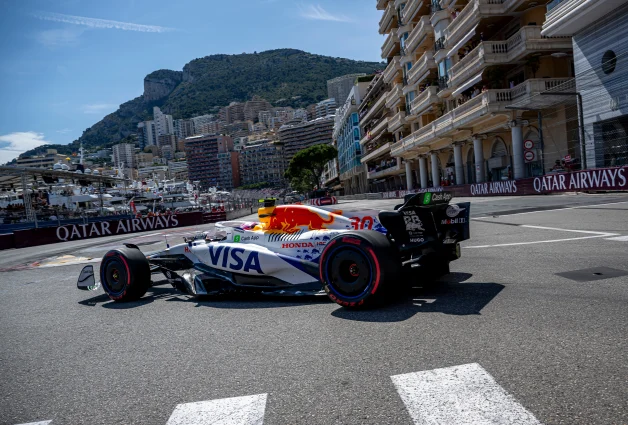
By 2009 and the sport's new regulations, Red Bull's fortunes changed. Horner's team was clearly one of the quickest in the new era. Vettel achieved their first pole position in China and converted the P1 start into a superb win. Furthermore, Mark Webber took P2 to complete a perfect weekend for Red Bull.
They won five more races in 2009 but couldn't quite overhaul Jenson Button and Brawn's early-season advantage. Instead, 2010 was their year, and the start of an era. Vettel won the title and the team won nine of the 19 races to clinch the constructors' title too. They then continued their dominance for the next three seasons, taking every title until the introduction of new regulations in 2014.
But even during the seven long years of Mercedes domination, Horner and Red Bull rarely lost competitiveness. A fiery partnership of Max Verstappen and Daniel Ricciardo solidified in 2016, ending a rocky and unstable post-Vettel period that involved a winless 2015 season.
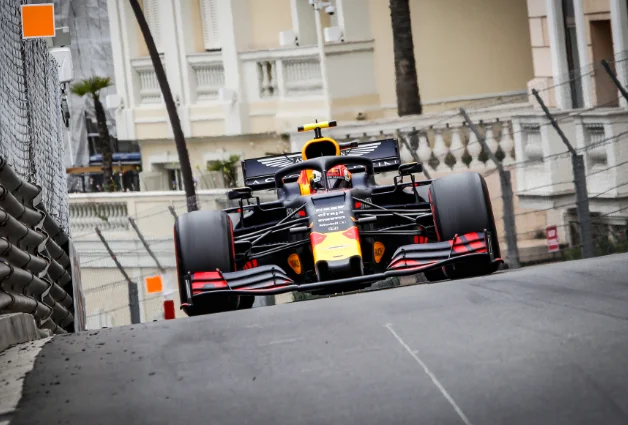
Verstappen won his first race in Red Bull colors at the 2016 Spanish Grand Prix and found more across 2017 and 2018. When Ricciardo left for Renault in 2019, Verstappen was a team-leading race winner. That proved pivotal in both Horner's success and subsequent downfall.
Horner and team advisor Helmut Marko had managed to complete the seemingly impossible task of replacing Vettel. Verstappen was a ruthless competitor who would surely compete for championships once the car was fast enough. He won five races across 2019 and 2020, then Verstappen dramatically took Red Bull's first championship in seven years in 2021. More championships over 2022 to 2024 followed and 2023 was notably one of the most dominant seasons in F1 history.
Horner's Number Two Problem
Nonetheless, issues persisted across the garage over those years. Since Ricciardo left, the team has struggled to find a second driver who can manage a car that is tuned to Verstappen's ultra-aggressive preferences. Pierre Gasly, Alex Albon, Sergio Perez, Liam Lawson and Yuki Tsunoda all looked impressive at other teams, but have failed to replicate those performances at Red Bull.
Horner sacked Perez at the end of 2024, having earlier handed the Mexican racer a new two-year deal earlier that season. The cost implications behind this decision are rumored to be part of the reason for Horner's sacking. To replace the Mexican, Horner promoted Liam Lawson, but quickly realized that he was not ready to handle the car. After just two rounds without a point scored, Tsunoda replaced him, but the Japanese driver has only scored four points in his first 10 races.
The constant chopping and changing between drivers and the inability to build a car that can suit more than just Verstappen's preferences have seemingly worked against Horner. The death of Dietrich Mateschitz, Red Bull's founder and supporter of Horner, opened the door for a power struggle, leading to where we are today. Horner navigated the choppy waters of last year's scandal with victories and titles in his pocket.
Those shiny and lucrative shields don't work so well when your team is unable to challenge for the title. Red Bull is jointly owned by Thai and Austrian parties, and recent changes to the ownership structure may have paved the way for the Austrian side to oust Horner, despite his maintaining the support from the Thai owners.
The Future
Horner's removal brought to an end an incredible era of Formula One. For Red Bull, it is the only era that the team has ever known. The new dawn will be led by Laurent Mekies, who has been promoted from Racing Bulls to become CEO and Team Principal of Red Bull Racing itself. The former FIA safety director and Ferrari sporting director has the mammoth task of turning around a sporting organization that has seen a dramatic decline in both stature and success over the past 12 months.
On analyzing his departure, it is important to emphasize the effect that Horner had on F1. 35% of drivers on the F1 grid have raced under his watchful eye at either Red Bull or its oft-rebranded junior team. Red Bull Racing has won races in every season but one since 2009, claiming 13 championships in those 17 years.
Christian Horner has his notable failings, but the significant impact of his management on both Red Bull and Formula One as a whole cannot be overstated. Whether this marks the end of his motorsport journey will only be known in the years to come. With a resume like his, though, it's unlikely that F1 has seen the last of him.