





Barcelona is one of Europe's most popular city breaks. It combines Mediterranean beaches, Catalan culture, Modernista architecture, markets, museums, and lively neighborhoods in one easy-to-explore city.
The best things to do in Barcelona are not limited to a single district. A first visit can move from Gaudí landmarks in Eixample to medieval lanes in the Gothic Quarter, seafood near the harbor, hilltop views, and a beach walk by the end of the day.
This guide focuses on the places in Barcelona that help visitors understand the city, along with practical planning notes for deciding how long to stay, what not to miss, and where to spend your time.
Planning Your Barcelona Visit
Barcelona is worth visiting if you want a city that mixes architecture, food, beaches, nightlife, and neighborhood wandering with plenty to do outside museums and guided tours. The appeal is the contrast: Sagrada Familia in the morning, Catalan food at lunch, a walk through the old city, and a sunset view from Montjuïc or Tibidabo.
Three days is enough for a first trip if you group the main things to do in Barcelona by area. Use one day for the Gothic Quarter, La Rambla, El Born, and the waterfront; another for Eixample and Gaudí highlights; and a third for Park Güell, Montjuïc, beaches, or a museum. A longer stay gives you more room for restaurants and day trips.
The places you should not miss are the ones that show Barcelona's range rather than just its postcard side. Gaudí's architecture is essential, but so are the old streets, seaside paths, and high viewpoints that make the city feel different from other major European cities.
Barcelona can be expensive in peak season and around major tourist attractions. Public transport, tapas bars, and self-guided walks along the waterfront or through historic areas help keep daily costs lower.
Best Things to Do in Barcelona
Sagrada Familia

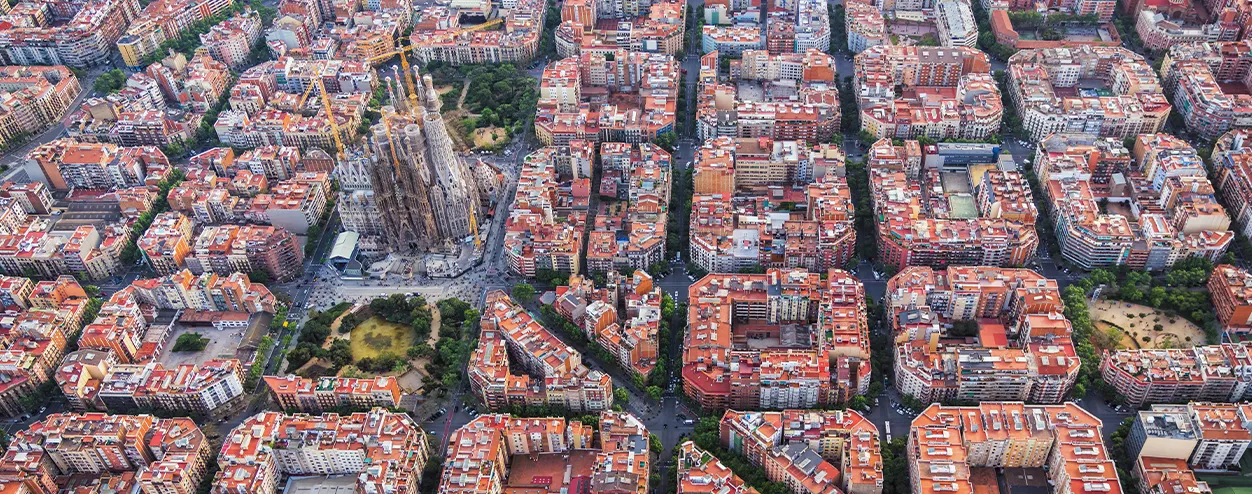
The Sagrada Familia is synonymous with Barcelona. It is one of the most eye-catching structures you will ever see and a cathedral that must be viewed to be believed. Designed by Antoni Gaudí in 1883, the basilica was supposed to be a neo-Gothic church. However, Gaudí created a church in his own Art Nouveau style instead.
When he started, he had no finished plan of what the Sagrada Familia would look like. He liberally changed his mind as he went. Today, the church is incomplete as Gaudí was unable to finish it within his original 10 to 15-year plan. It is beautiful inside and out, and a truly unforgettable tourist attraction.
La Rambla

La Rambla is the social heartbeat of Barcelona. The avenue that runs down the middle of Barcelona's Old Town is a central meeting spot for locals. The street is lined with trees offering shade from those nearly endless hours of sunlight each year.
Visitors can find some of the best shopping in Barcelona at La Rambla along with restaurants, bars, and coffee shops. Many of the buildings offer a look into the city's past through their architecture. The shops and restaurants are typically filled with locals living in the city as they shop for their everyday needs.
Many of the top tourist attractions and beaches can be reached easily from La Rambla. Using it as the center of your Barcelona holiday is a great idea.
Gothic Quarter and El Born
The Gothic Quarter and nearby El Born are essential for visitors who want to see Barcelona's older side. Narrow lanes, small squares, stone facades, boutiques, tapas bars, and historic churches make this one of the best areas to explore without a strict plan.
This part of the city works well when you want a break from scheduled sightseeing. The experience is less about checking off one monument and more about getting a feel for Barcelona's historic neighborhoods. It is also a practical area for food stops, shopping, and evening walks.
Formula GT Experience
Fancy driving a real Formula race car? Maybe you would like to get behind the wheel of a Lamborghini? Well, the Formula GT Experience gives you the chance to do just that. There are different packages provided by the company, but each allows you to sit in a 'dream' car and drive around the race track.
The experience uses two race tracks in Barcelona, Circuit de Barcelona-Catalunya, and Circuito de Can Padró. Each offers you the thrill of a lifetime as you go at speeds you previously only dreamed of. The experience only takes place on select days, so check the schedule before planning your trip.
Circuit de Barcelona-Catalunya Tour

Circuit de Barcelona-Catalunya is the current home of the Spanish Grand Prix. It is also an excellent travel destination when visiting Barcelona on holiday. Visitors to the circuit can take the official tour of the race track.
The tour will give you the ins and outs of the entire race track. You will learn what it is like to be a driver during the Spanish Grand Prix as you tour the paddock, briefing rooms, podium, and other race day team-only areas.
The hour-plus tour is a unique adventure for Formula One enthusiasts and gets you closer to the track than a race-day experience. For Formula One fans, the tour is likely to be one of the most rewarding things to do in Barcelona.
Port Vell

Port Vell, the harbor at the Port of Barcelona, is the major hub for tourists in the city. The harbor has a concentration of attractions that keep visitors coming in droves.
Just south of La Rambla, interesting places to visit at the harbor include the old customs building, the Columbus Monument, and the Rambla del Mar wooden walkway, which has a suspension bridge with an interesting-looking wavy design.
Rambla del Mar leads to the magnificent Maremagnum Mall. In addition to various shopping options, the mall has plenty of restaurants, an IMAX theater, and perhaps the most exciting of all, the Barcelona aquarium within the building. You're also likely to find a collection of high-end yachts and perhaps a few megayachts docked at the harbor close to the mall.
But before crossing over to the mall to enjoy these attractions, be sure to take a ride on the pirate ship to explore a little more of the marina. If the pirate ship doesn't appeal to you, other boat rides are available with various themes.
Barceloneta Beach and the Waterfront
Barceloneta gives Barcelona a coastal rhythm that many major European cities lack. The beach, marina, seafood restaurants, and waterfront paths are easy to combine with Port Vell, the aquarium, or a relaxed afternoon after sightseeing.
The beach is busiest in warm months, but even outside peak season the waterfront is worth adding to a Barcelona itinerary. It gives the trip a break from ticketed landmarks and helps balance the city's architecture-heavy sightseeing.
L'Aquàrium Barcelona

L'Aquàrium Barcelona should be on your list of places to visit during your trip to Barcelona. It has 11,000 animals belonging to 451 species and 5 million liters of water.
In addition to observing the aquatic life swim around through the well-designed glass tanks and the 80-meter underwater tunnel, you can choose to participate in shark cage diving under the watchful eyes of instructors. This offers a safe way to get closer to the sharks, likely the most popular aquarium dwellers among visitors.
If you're interested in getting educated about the marine life, you can take the 90-minute guided tour. The tour covers the best parts of the facility and offers an opportunity to learn about sea creatures from different tropical seas. These include the Great Barrier Reef in Australia, the Red Sea, and the waters of the Caribbean.
Best of all, premium passes are available, so you can avoid waiting in line as the aquarium can get very busy during holidays.
Ciutadella Park

Ciutadella Park is one of Barcelona's most appealing green spaces. It is near the Gothic Quarter and El Born, offering an easy escape from the busy streets while still keeping visitors close to many of Barcelona's main attractions.
The park has wide promenades, shaded lawns, an ornamental lake, and elegant landscaping. It is ideal for a relaxed walk or a sightseeing break.
The lake gives the park another quiet place to pause, with rowboats moving across the water. Another of the park's striking highlights is the Cascada Monumental, a grand fountain with dramatic sculptures and staircases that draws plenty of attention from photographers and first-time visitors.
Ciutadella Park is also home to the Barcelona Zoo and several notable buildings, including the Parliament of Catalonia, which adds a cultural and historical angle to what is already a compelling place to visit.
Ferrari Land

Ferrari Land has everything a fan of the carmaker wants. If you aren't a Ferrari fan, it is still one of the coolest destinations for a car enthusiast in Barcelona. The theme park is full of exciting rides and thrills.
The Ferrari Experience will take you through the history of the Italian carmaker. You can also take a trip down memory lane of Ferrari's Formula One past. The park is home to some of the most exhilarating rides in the world. Red Force takes you from 0 to 180 km/h in just five seconds. It will also take you 112 meters into the sky.
After accelerating into the heavens, ride the Free-Fall Tower. You will drop from 55 meters in the sky straight down. It is an adrenaline-pumping experience. Ferrari Land also has an all-new kids' area that offers children their own thrill rides.
Plaça de Catalunya

King Alfonso XIII commissioned the 5-hectare Plaça de Catalunya square in 1927. It links the historic Gothic Quarter and La Rambla with the elegant avenues of Eixample. The fountains, sculptures, pigeons, cafés, and shops all combine to enhance the square's appeal.
It is a great starting point for exploring Barcelona on foot, especially for tourists heading toward Passeig de Gràcia, La Boqueria, or the medieval streets of the old city. The area around the square used to host luxury hotels, looking to take advantage of the 1929 International Exhibition.
Sadly, most are no longer there today. If you're seeking a quiet place, Plaça de Catalunya isn't for you. Its energy is part of the appeal. Visitors often pause here to take photos, meet guides, enjoy coffee, or simply watch the movement of city life. The square captures Barcelona's dual appeal as a historic destination and an urban capital.
La Boqueria and Barcelona's Food Markets
La Boqueria is a convenient food stop just off La Rambla. The market is popular with visitors, and great for quick bites, fruit, seafood, cured meats, and a sense of how central food markets shape daily life in the city.
For a broader look at the city's food scene, pair famous stops like La Boqueria with neighborhood markets and casual local meals away from the busiest stretch of the old city.
LRS Formula
If touring Circuit de Barcelona-Catalunya excites you, driving a real Formula One car is going to be your favorite of all the things to do in Barcelona. LRS Formula offers car lovers the chance to drive some of the fastest cars on the planet.
The driving experience offers a variety of Formula One cars, including the Williams FW33 and Jaguar R3. Supercars from Ferrari, Lamborghini, and Porsche are also available.
You can drive along the famed Circuit de Barcelona-Catalunya and experience the same straightaways and chicanes as Formula One's greats. If you don't want to sit in the driver's seat, LRS Formula allows you to ride along as a passenger.
Park Güell

After experiencing the thrills of Formula One driving, why not bring your heart rate down by visiting Park Güell in the Turó del Carmel (Carmel Hill) part of Barcelona?
Wealthy industrial revolution entrepreneur Eusebi Güell commissioned the park, and Antoni Gaudí designed it. Park Güell is a UNESCO World Heritage site featuring gardens and unique structures that reflect Gaudí's artistic prowess. The structures here are considered among the best of his creations.
The park was designed in Gaudí's surrealist style and includes crowd favorites like the birds' nests in the terrace walls, the serpentine bench that offers a little privacy to visitors, three viaducts, and a terrace that provides one of the best panoramic views of the entire city.
Also on the grounds of the park is Casa Museu Gaudí (Gaudí House Museum), originally Gaudí's home. It still contains some of the renowned architect's personal belongings.
During your visit to the park, you should also visit Gaudí Experiència, a museum about a block away from the park's south entrance, focusing on the architect's work. The museum includes interesting exhibits and interactive shows to keep visitors entertained.
Tibidabo

In addition to having stunning panoramic views of Barcelona, Mount Tibidabo is also home to a thrilling theme park and a neo-Gothic cathedral. You can take the Tramvia Blau tram up the mountainside.
Continue on the funicular train, and more forest views hidden from ground level will appear. The theme park's original rides were installed in 1905, but the park has since undergone multiple updates that have replaced older rides with newer ones.
Casa Batlló

Casa Batlló is an intriguing house that draws a lot of attention from visitors to Barcelona. It is on Passeig de Gràcia, one of the city's major avenues. The Batlló family bought the house in 1903 and commissioned a renovation. They had purchased it for its desirable location.
Josep Batlló hired Antoni Gaudí to update it, with the intention of tearing it down. However, Gaudí convinced him to proceed without a teardown.
The finished work reflects Gaudí's unique design style with uneven arches and intricate spiral shapes all around the house. The resulting unique look makes it difficult not to notice the house while walking down Passeig de Gràcia.
You're likely to see a crowd of tourists congregated in front of the house, taking photographs. The building is open for tours, and continued renovations have kept it fresh over the years. Interesting rooms on display include the Gaudí Cube, the attic, and the Batlló family's private residence.
Casa Batlló became a UNESCO World Heritage Site in 2005 along with other properties designed by Gaudí. Any fan of the Gothic Revival architectural style that inspired much of Gaudí's work will enjoy a visit to this house. However, most visitors are likely to be impressed with the unique look.
Palau Nacional

Palau Nacional is one of Barcelona's most striking landmarks. The grand palace offers views over the Magic Fountain of Montjuïc, Plaça d'Espanya, and a broad stretch of the city. Its monumental architecture, broad stairways, and domed silhouette make it one of the city's most photogenic sites (but it's worth noting that there's no shortage of those).
If the place looks familiar even though you've never been to Barcelona, that's likely because the landmark featured prominently in the 2022 Ruben Fleischer movie, Uncharted. Palau Nacional houses Museu Nacional d'Art de Catalunya (MNAC), where visitors can discover a collection of Catalan art spanning centuries. Inside, frescoes and modern pieces provide a rich introduction to the region's artistic heritage.
The terraces around Palau Nacional offer some of the best panoramic views in Barcelona, especially at sunset, when the city takes on a golden glow. Combined with nearby gardens, fountains, and Montjuïc attractions, it is a rewarding stop on any sightseeing itinerary.
Barcelona Wine Week
Held annually in early February, Barcelona Wine Week brings together small businesses and market leaders for an exhibition on wine and gastronomy.
Showcasing the growing Spanish wine market and other well-known wine-making regions, the winter festival brings together over 800 winemakers to learn from one another and network. If you are a wine lover, it is worth considering.
Airport
Transportation
- Bus: Barcelona airport bus number 46 operates during the day while NitBus operates at night. The Aerobus service is an express bus service that also links Barcelona airport to the city center
- Taxi: You will find a taxi rank outside any of the main terminal exits.
- Train: The RENFE train service runs every 30 minutes to and from Barcelona airport to the city center. Travel time is about 25 minutes.
Ride Hailing
Uber, Cabify, Bolt, Free Now, Blacklane
Popular Local Cuisine
Caragols a la llauna

Caragols a la llauna, grilled or oven-cooked snails, is a delicacy of the Catalan region and widely eaten around Barcelona. The snails are served with a vinaigrette or aioli dressing. Mayonnaise and garlic are also added to the dish for taste.
The L'Aplec del Cargol is a festival held in Catalonia every year that attracts hundreds of thousands of people to dine on snails. While Barcelona is located in Spain, it draws a lot of its food influence from neighboring France. However, snails have long been eaten in Spain as well as France and Italy, with Spaniards eating snails documented back in the 11th century.
Best Time to Visit
The best time to visit Barcelona is late spring or early autumn. These months offer the best balance of warm weather and good conditions for exploring the Gothic Quarter, Eixample, Gràcia, and the waterfront on foot. Late spring is great for alfresco dining and sightseeing before the peak summer crowds arrive. Early autumn keeps much of the summer atmosphere, with more manageable temperatures and better conditions for long days outside.
Historical Weather by Month
Barcelona, Spain
Frequently Asked Questions About Things to Do in Barcelona
What are the best things to do in Barcelona on a first visit?
The best things to do in Barcelona on a first visit include seeing Sagrada Familia, walking through the Gothic Quarter, visiting Park Güell or Casa Batlló, exploring La Rambla and nearby markets, and saving time for the waterfront or Montjuïc views.
How many days do you need in Barcelona?
Three days is enough for a strong first visit to Barcelona. Four or five days is better if you want a slower pace, beach time, Gaudí sites, museums, food markets, and a day trip without rushing.
Is Barcelona expensive to visit?
Barcelona can be expensive around major attractions, popular hotels, and peak summer dates, but costs are easier to manage with public transport, free viewpoints, and neighborhood walks.
Is Barcelona walkable?
Barcelona is very walkable within individual neighborhoods, especially the Gothic Quarter, El Born, Eixample, and the waterfront. The metro is useful when moving between districts or reaching attractions farther from the center.
What currency is used in Barcelona?
Barcelona uses the euro. Credit cards are widely accepted at hotels, restaurants, shops, and major attractions, but it is useful to carry some cash for markets, small cafes, tips, or quick purchases.
Where to Stay

Set-Jetting: Film & TV References