






Situated in Italy's dramatic Tuscan region, Florence is one of Europe's most beautiful cities. Considered by many as the capital of Italian art, it is a city built on Renaissance architecture, Tuscan food, and great museums including the Uffizi and Galleria dell'Accademia.
A trip to Florence is an exploration of the Italian Renaissance, but the city feels more compact and walkable than many other major European destinations. Its historic center brings cathedrals, palaces, galleries, bridges, markets, and river views close together, creating a rich collection of attractions for visitors.
The City of Lilies isn't just full of museums with famous paintings and statues. It also has food markets, viewpoints, artisan neighborhoods, and day-trip options, including Mugello Circuit for motorsports fans. This guide highlights the best things to do in Florence while keeping the most useful planning decisions close at hand.

Planning Your Florence Visit
Florence is worth visiting for travelers who want a city where world-famous art, landmark architecture, Tuscan food, and atmospheric streets fit into a small historic center. The best things to do in Florence are concentrated enough that you can move between major sights on foot, but the city rewards pacing yourself rather than racing from museum to museum.
Florence is most famous for being the birthplace of the Renaissance, with an artistic legacy that still shapes the city today. That reputation is the reason so many travelers come for museums and churches, but the real appeal is how naturally that history blends into meals, markets, and river views.
Two full days can cover the essentials, while three days in Florence is better if you want to visit the major attractions without feeling rushed. With a third day, you can also spend more time across the Arno in the Oltrarno area or use Florence as a base for a Tuscan outing.
What you should not miss in Florence depends on your interests, but the strongest first visit balances one or two major art stops with time outside in the historic center. Timed tickets for the busiest museums and climbs are worth booking ahead, especially from spring through fall.
Florence can get expensive, but it is easy to control costs. Walking is practical, many streets and piazzas are free to enjoy, and casual meals from bakeries, markets, and trattorias can balance the cost of museum tickets. A car is usually more trouble than help inside the historic center because of restricted zones, narrow streets, and limited parking.
Best Things to Do in Florence
Piazza della Signoria

Piazza della Signoria is one of Florence's most compelling public spaces. While fans of the movie A Room with a View may insist that the production made the piazza famous, in reality, the piazza has been the center of politics in Florence since the 14th century.
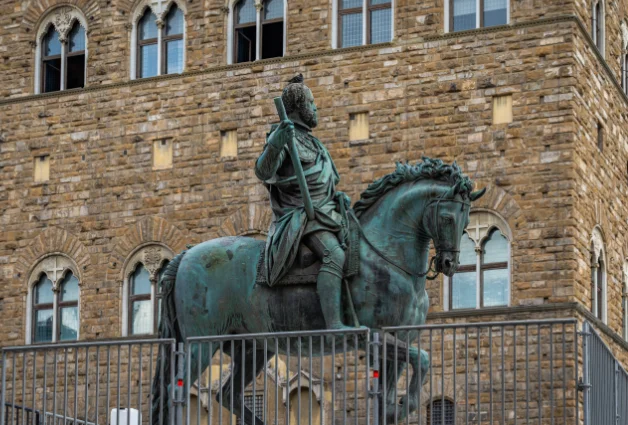
Dominated by the imposing Palazzo Vecchio, it remains an essential stop for visitors exploring the city. The piazza offers an immediate sense of Florence's artistic ambition, political power, and enduring urban character at every turn. The open-air Loggia dei Lanzi is essentially a sculpture gallery, with works such as Cellini's Perseus and Giambologna's Cosimo I de' Medici on display.
Nearby, the replica of Michelangelo's David marks the entrance to Palazzo Vecchio, while the Fountain of Neptune brings further grandeur to the square. Piazza della Signoria is the ideal starting point for a tour of Florence's key landmarks. Cafés along the streets by the square also offer great resting stops to pause and take in the surroundings.
Palazzo Vecchio

Arguably the main attraction around Piazza della Signoria, Palazzo Vecchio dates back centuries and now serves as a hub for the city. Acting as the city's council buildings since the 1300s, the Palazzo is the center of life in Florence. The interior of the building is stunning, featuring beautiful architecture, sculptures, and intricate roof frescoes.
Uffizi Palace and Gallery

If there is one must-see destination in Florence, it is the Uffizi Palace and Gallery. The Uffizi is a museum for everyone, even if strolling through art galleries isn't one's favorite activity.
Its collection is breathtaking, and the building itself is a work of art. The Uffizi is home to paintings by many of the biggest names of the past, including Raphael, Michelangelo, and Caravaggio.
Many travelers believe Paris' Louvre to be the best museum in the world, but a trip to the Uffizi may change that.
Cathedral of Santa Maria del Fiore and Piazza Duomo

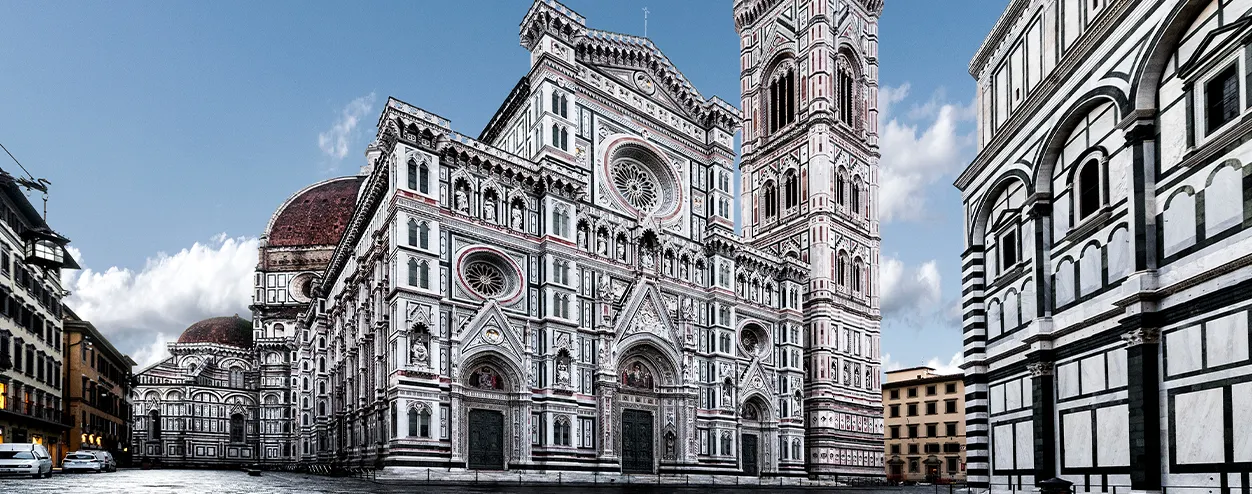
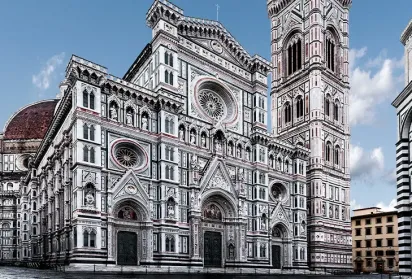
The Cathedral of Santa Maria del Fiore and Piazza Duomo rise above Florence in an impressive fashion and dominate the city's skyline.
Visitors can tour the complex and view the Duomo's cathedral, museum, and bell tower. The museum is small but holds some of the world's greatest art treasures. You're not likely to see any feature on Florence that doesn't show this iconic landmark, so you should make the time to visit the place during your visit.
Piaggio Museum

Travelers tired of looking at paintings and statues can visit the Piaggio Museum for a different type of art. The museum is dedicated to Vespa, maker of the world's most stylish motor scooters.
The museum is located in Pontedera, just 38 miles to the east of Florence. Travelers can enjoy a day trip to the museum via a 45-minute train ride to Pontedera and experience the regularly updated venue.
Vespa lovers will find examples of every model the company has ever made. Situated next to the Vespa factory, the museum offers visitors a lesson in Vespa's role throughout history.
Mugello Circuit Puresport Experience

With Mugello Circuit just 23 miles away, Florence is a perfect base for travelers who prefer motorsports over the arts.
Mugello is the annual host of MotoGP's Italian Grand Prix. Motorcycle enthusiasts can experience one of the most prominent races at Mugello every summer. Car enthusiasts, on the other hand, can find the Puresport experience at the Mugello Circuit. Drivers can select from an assortment of sports cars, including the Ferrari 488 GTB, Lamborghini Huracan, and more.
Although Mugello doesn't usually host F1 races, it is owned by Scuderia Ferrari. The Italian team regularly uses the track for F1 testing, and travelers may catch a glimpse of Ferrari's top drivers while visiting.
Tuscany Outdoor Trails

The hills and countryside that surround Florence are gorgeous. Much of the countryside is untouched, and the parts that are farmed have been made into beautiful olive and grape growing centers.
There are a lot of hiking trails around Florence with varying degrees of difficulty. Whether travelers are looking for a leisurely walk with astonishing views or trail running paths for an unforgettable workout, they will find the perfect natural excursion in Florence.
Outdoors companies offer guided hiking tours, but travelers wanting more of a casual outing can plan their own. Due to the varying difficulty of trails, travelers should do their research before embarking on their own.
Galleria dell'Accademia

Known around the world as a premier location to enjoy Renaissance art, the Galleria dell'Accademia is a must-visit for any art connoisseur. The many galleries in the museum are home to some of the most iconic works of that time, such as the famous Statue of David by Michelangelo. Much of Italy's culture is steeped in its art, making this a visit you can't skip.
Toscana SUP on the Arno River

Stuck between wanting to explore the city on foot or by water? Try both! Experience the fun of stand-up paddle boarding while exploring the city, gaining a different perspective on the sights. The tours take you along the Arno River, allowing you to see all the sights in Florence while getting a workout and gaining a new skill.
Mercato Centrale

Located in the bustling heart of Florence, the buzz of this indoor market is not to be missed. While local businesses sell their goods to visitors, foodies can indulge in the local cuisine and stock up on snacks or fresh produce. The market is also great for purchasing gifts for the whole family, giving them something unique to cherish.
Ponte Vecchio

Ponte Vecchio, a medieval crossing over the Arno, is Florence's most recognizable bridge. That rare 'shopping-bridge' character is what makes it such an easy point of comparison to Pulteney Bridge in Bath, England, another celebrated bridge lined with shops on both sides.
Bath's version is Georgian and Palladian in spirit, with an architectural symmetry that contrasts with Ponte Vecchio's older, more intimate tangle of storefronts and river-worn atmosphere. At dusk, the Arno turns mirror-like below, and the bridge becomes one of the city's most photogenic spots for watching Florence slip into the evening.
The Florentine original's fame travels well beyond Tuscany. The Hilton Lake Las Vegas Resort & Spa includes a Ponte Vecchio replica, a playful echo of Florence's storied silhouette transplanted to the desert. It proves how enduring the bridge's image has become.
Piazzale Michelangelo

Piazzale Michelangelo is one of Florence's most popular viewpoints. It offers a sweeping panorama of the city's historic skyline. Set on a hill on the south bank of the Arno River, the square overlooks the Duomo, Palazzo Vecchio, Santa Croce, Ponte Vecchio, and the soft Tuscan hills beyond.
Architect Giuseppe Poggi designed the piazza in the 19th century as part of Florence's urban renewal during its time as Italy's capital. At its center stands a bronze replica of Michelangelo's David, accompanied by copies of the Medici Chapel allegories, honoring the artist whose legacy is deeply tied to the city.
It is popular at sunset, when the city's terracotta rooftops glow in warm light, and the river reflects the changing colors of the sky. However, it can get crowded at sunset. Walking up from the Oltrarno district offers a memorable approach through stairways and greenery. The Basilica of San Miniato al Monte, about a minute away, offers another good vantage point and isn't as crowded.
La Specola Wax Museum
Founded in the 1700s, La Specola houses some of the most well-kept, anatomically correct wax statues in the world. The figures are so well crafted that they are eerie to view.
Many of the wax figures are female and posed in romantic positions. It is a strange museum but well worth visiting thanks to being 'off the beaten path' compared to the city's most-visited galleries.
Airport
Transportation
- Bus: The Volainbus bus runs a non-stop route between the airport and the Bus Italia bus station. The bus runs every 30 minutes.
- Taxi: Taxis are stationed in front of the terminal
Ride Hailing
Blacklane
Popular Local Cuisine
Bistecca alla Fiorentina

Florence's most famous dish is Bistecca alla Fiorentina, a large T-bone steak grilled over fire. The steak is seasoned with lemon, salt and pepper, and roasted chestnuts that add flavor, with the finished product weighing anywhere between two and eight pounds.
Bistecca alla Fiorentina should be pink and bloody on the inside for flavor, so know what you are getting into before ordering it. Do not ask for the steak to be well-done as you will offend the chef; Bistecca alla Fiorentina is made just one way. The steak's origins are lost to history but it is believed the dish is as old as Florence itself.
Best Time to Visit
The best time to visit Florence is in spring or fall, when the weather is pleasant and you can avoid the intense peak summer heat. Summer also ushers in the steepest hotel rates (with no additional benefits). April, May, September, and October work well because you can combine timed museum visits with outdoor viewpoints, markets, and long walks through the historic center without building the whole day around heat relief. Summer brings longer days but also heat and larger crowds, while winter is quieter and can be a good choice if museums are your priority.
Historical Weather by Month
Florence, Italy
Frequently Asked Questions About Things to Do in Florence
Should you book Florence attractions in advance?
Yes, book timed entry in advance for the busiest museums and climbs, especially during spring, summer, and early fall. Smaller churches, piazzas, markets, and many viewpoints are easy to fit around those fixed reservations.
What is the best area to stay in Florence?
First-time visitors usually do well in or near the historic center, where walking to museums, piazzas, restaurants, and the train station is simple. Oltrarno is also a good choice if you want a slightly quieter base with artisan streets and evening atmosphere.
Is Florence good for families?
Florence can work well for families because the center is walkable and many sights are close together. Short museum visits, gelato breaks, open piazzas, markets, and viewpoints usually make the city easier with children than an all-day gallery schedule.
What currency is used in Florence?
Florence uses the euro. Credit cards are widely accepted in hotels, restaurants, museums, and many shops, but it is still useful to carry some cash for small purchases, market stalls, and cafe stops.
Is Florence walkable?
Yes. Florence is very walkable, especially around the historic center, where many major sights, shops, and piazzas are close together. Comfortable shoes matter more than transit planning for most visits.
Set-Jetting: Film & TV References