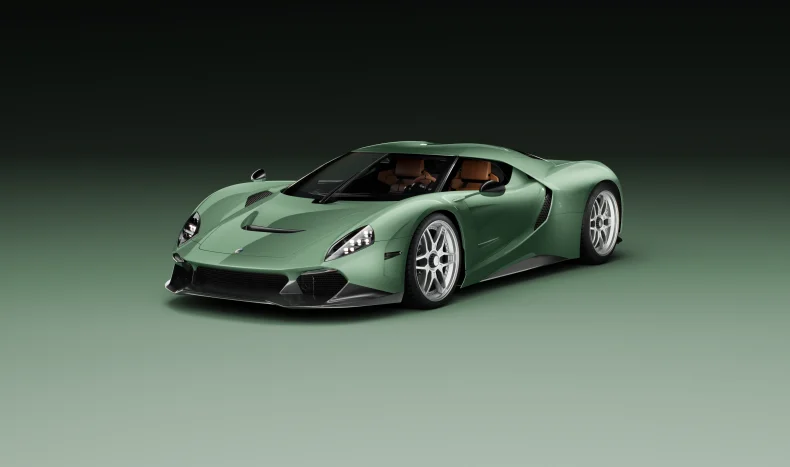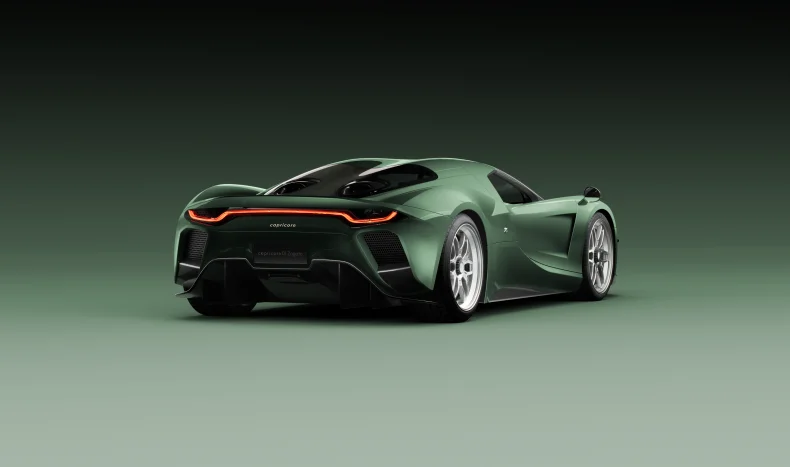




Capricorn isn’t exactly a household name, but this little-known German manufacturer has left its mark on many iconic cars well known to the community of car enthusiasts. If you’re one of many who weren’t familiar with the name, that’s now a thing of the past.
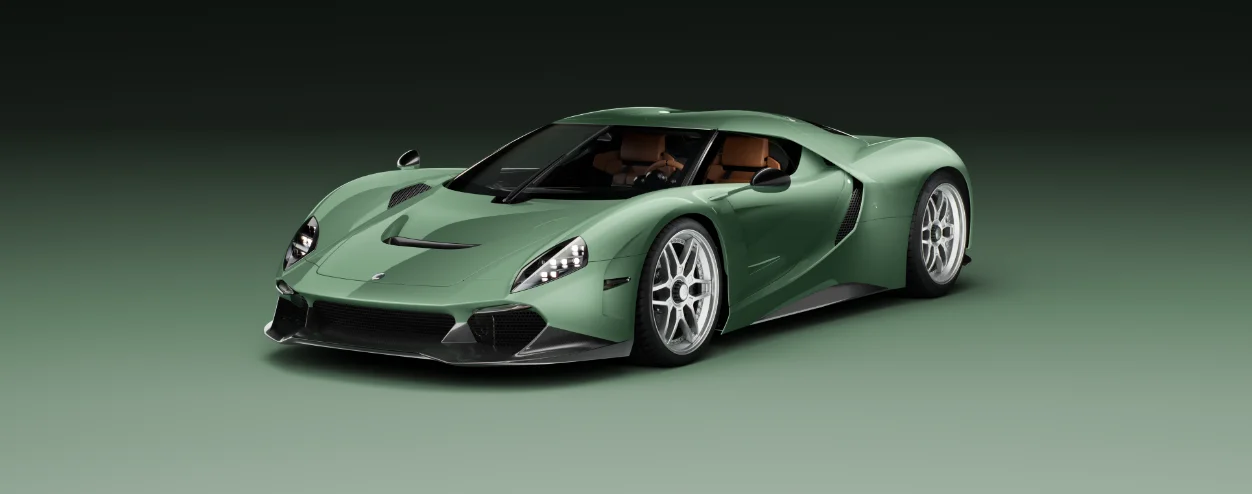
Perhaps this company is no longer content with being in the background, as evidenced by the release of the Capricorn 01 Zagato. That’s a €2.95 million hypercar that has another background dweller, albeit a better-known name, Zagato, in its moniker.
The car is the first hypercar to have a Zagato-designed body. Revealed in Düsseldorf on October 10, the Capricorn 01 Zagato pairs obsessive lightweight engineering with Italian sculpture and an unashamedly analog soul. Only 19 will be built, each priced at €2.95 million before taxes and sold exclusively through the Louyet Group.

Powertrain
The mid-engine car is powered by a 5.2-liter supercharged V8 whose origins are deliberately transparent and proudly transformed. Capricorn began with a proven Ford block and re-engineered it with an in-house suite of components, supercharger, dry-sump lubrication, rotating assembly, intake, cooling, and exhaust.
These are all tied together by Capricorn’s own ECU and mapping. The result is more than 900 PS and 1,000 Nm with a heady 9,000 rpm redline, numbers tempered by a philosophy that favors feel over fireworks (in other words, they could have made it more powerful but chose not to).

Power flows to the rear axle through a CIMA five-speed dogleg manual shifter chosen for its mechanical intimacy rather than headline gear counts. In the company’s words, this is a “pure, analog driver’s hypercar,” with 0-62mph in less than 3.0 seconds and a claimed top speed of 223 mph.
Aerodynamics
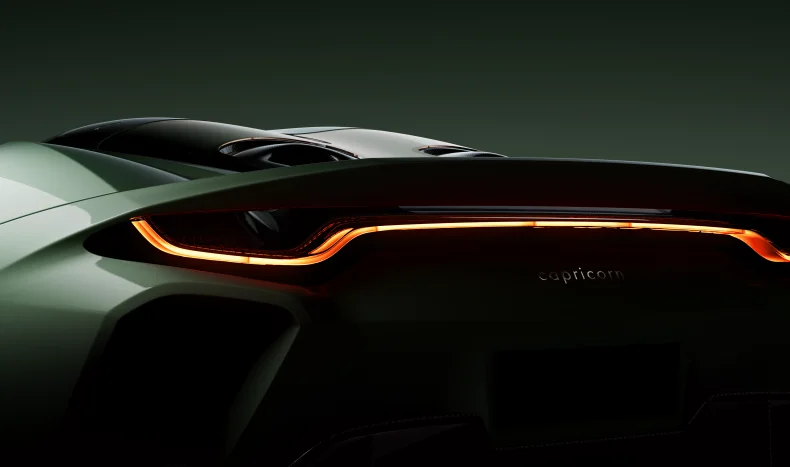
Zagato developed the form in lockstep with Capricorn’s engineers and external Computational Fluid Dynamics (CFD) partners so that airflow became an organizing principle rather than an afterthought. There was a conscious effort to avoid large spoilers.

Judging from the wording in the press release, there’s no love lost between the engineers working on the project and overbearing race car rear wings.
With designers determined to avoid typical downforce-generating features like a large rear wing, they had to get clever to deliver ideal airflow management. An internal airflow management system, the underfloor design, and the front and rear diffusers facilitate this.
The car has many air intakes and outlets. Perhaps the most significant is the large rear air intake located behind the driver’s door. Air is channeled into the intake with the help of the surface of the door.

Exterior
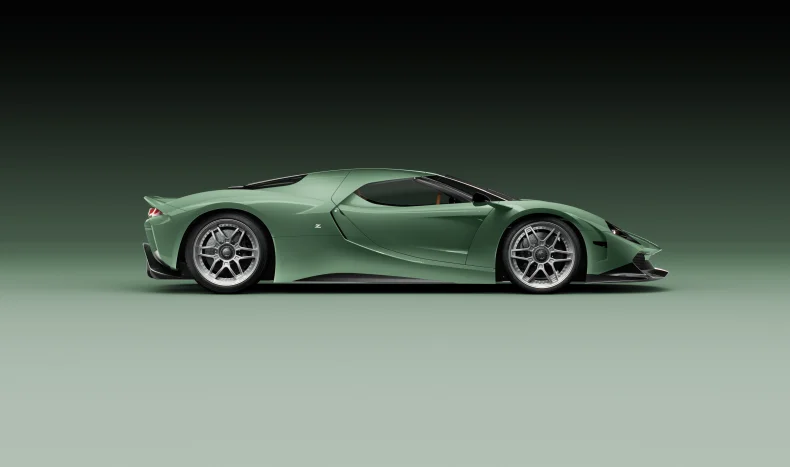
This is Zagato’s first hypercar body, and Chief Designer Norihiko Harada pursued an avant-garde statement intended to sit comfortably among great automobiles from any era. The stance is pure theater, made more so by gullwing doors, yet the details speak to restraint in the service of weight and longevity.
Side mirrors are mounted on the fenders for weight reduction, and pointedly, cameras were dismissed to preserve the car’s timeless character. A pin-sharp feature line darts over the front fender, vanishes into the rear intake, then reappears to sweep over the haunches. That’s an aesthetic rhythm born of aerodynamic necessity.

Interior
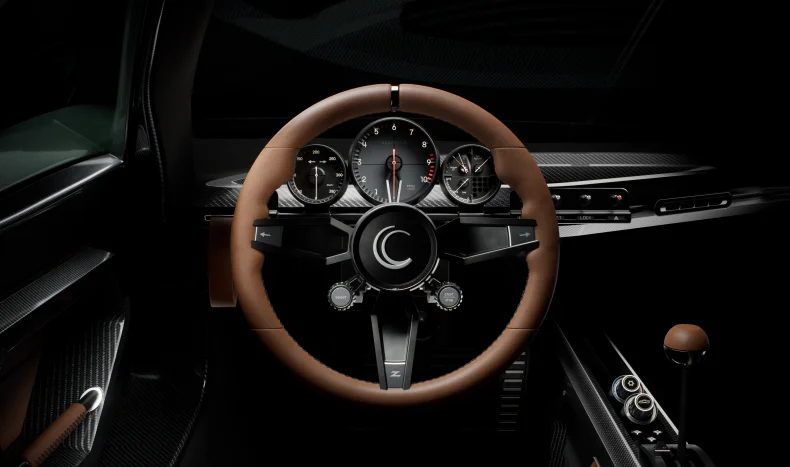
The cabin is a study in minimalism, executed with racing clarity. There’s a very generous use of carbon fiber in nearly everything you touch. Exceptions include the switchgear machined from solid titanium and aluminum and the Connolly leather-wrapped steering wheel. The three-spoke wheel carries only start/stop and the mode selector.
Behind the wheel, a three-dial analog cluster places a large central tachometer between a speedometer and a multi-gauge binnacle for fuel and vital temperatures and pressures.
Fixed-position seats are part of the safety cell, with Schroth four-point belts and adjustable cushioning. The steering column and pedal box adjust, and the dogleg lever itself slides longitudinally by 80 mm to perfect the reach.
Each car is bespoke in color and finish - including full exposed carbon or custom weaves. The car comes with a two-year warranty and four-year service plan. Maintenance is performed at the company’s Düsseldorf facility to ensure quality and long-term parts availability. Any potential buyer in North America will need to think about this before making a purchase. Production will commence in the first quarter of 2026.


View the article image gallery