Nice is a popular French Riviera city that combines great coastal views with rich history and culture. The city is best known for Promenade des Anglais, its pebble beaches, Old Town markets, Mediterranean food, Belle Époque hotels, and the blue sweep of the Baie des Anges. For travelers comparing things to do in Nice France, it also offers museums, scenic walks, and easy access to nearby Riviera towns.
The buildings, cuisine, and vibrant streets showcase its Mediterranean charm and blend of French and Italian influences. The city's seaside promenade offers a place to take a walk, sit at a cafe, or enjoy the view of the clear blue waters. The old town invites visitors to explore local flavors and crafts with its lively markets.
There are plenty of things to do in Nice. The city has long inspired artists and is a cultural hub with many art shops and events. Visitors can enjoy the blend of history, art, scenery, food, and waterfront life that defines Nice. The airport is also close to town, so you can enjoy aerial sights of the city before you land.
On This Page
- Things to Do
- 1. Promenade des Anglais (Promenade of the English)
- 2. Parc de la Colline du Chateau
- 3. Vieille Ville
- 4. Place Masséna
- 5. Promenade du Paillon
- 6. Port Lympia
- 7. Monument aux morts de Rauba-Capeù
- 8. Musée Matisse
- 9. Musée Masséna
- 10. Other Art Museums
- 11. Le Negresco Hotel
- 12. Mont Boron
- 13. Libération
- 14. Marche aux Fleurs Cours Saleya
- 15. Cathédrale Saint-Nicolas de Nice
- 16. Place Garibaldi
- 17. The Beaches of Nice
- 18. Château de Crémat
- 19. Saint-Jean-Cap-Ferrat
- 20. AGS Formule 1 at Circuit du Var
- 21. Day Trip to Èze
- Best Time to Visit
- Popular Local Cuisine
Planning Your Nice Visit
Nice is worth visiting if you want a Riviera base with beaches, museums, markets, restaurants, and strong transport links. Many of the best things to do in Nice France are close enough to combine in one relaxed day, while the train makes it easy to visit nearby towns.
Budget expectations matter here. Nice is not the cheapest city in France, but it is more flexible than some smaller Riviera resorts. Public beaches, Castle Hill, Vieille Ville, Promenade des Anglais, and tram rides help keep costs down, while private beach clubs, 5-star hotels, and waterfront dining can make the trip expensive.
Two full days is enough for the main attractions in Nice. Three days in Nice is enough for a more balanced visit, with time for a museum, and a day trip to a nearby village. Four days is better if you want a slower pace or day trips to Eze, Villefranche-sur-Mer, Saint-Jean-Cap-Ferrat, or Monaco.
Some sights deserve priority even on a short visit. The views from Castle Hill Park and Mont Boron are among the things not to miss in Nice, especially if you want the city, the port, and the Baie des Anges in one sweep. Nice is also one of the French Riviera cities you can enjoy without driving. The tram connects the airport, city center, and many practical stops, while trains and buses make day trips easy to plan. A car is useful for hill towns and scenic drives, but it is not required for the core things to do in Nice.
Things to do & see
Promenade des Anglais (Promenade of the English)
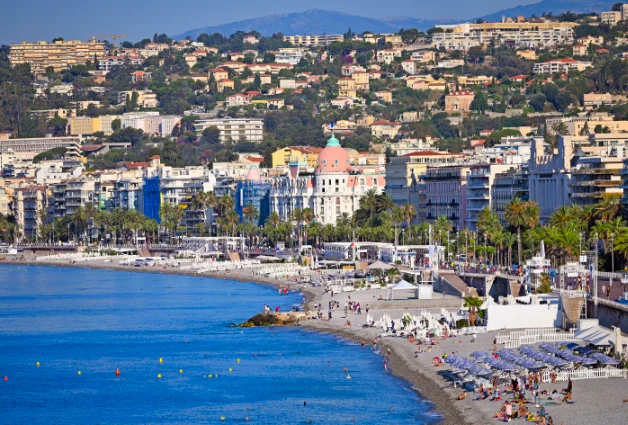
Promenade des Anglais is a stretch of road that runs along the beach with amazing views of the Mediterranean Sea. How did it get its name? The street was popular with English aristocrats back in the 19th century and they played a role in making it famous.
The street is one of the most popular attractions in Nice as it is a wonderful place to enjoy the city's great weather. It has many pebble beaches and storied landmarks, so it belongs high on any list of the best things to do in Nice.
You can stroll along the promenade with no worries. Concrete pillars separate the sidewalk from traffic. While the walk is popular, if you want to enjoy the best of Promenade des Anglais, you should view it from Castle Hill Park.
Parc de la Colline du Chateau

Parc de la Colline du Chateau (Castle Hill Park) is a park on a hill close to La Baie des Anges (Bay of Angels). Its position makes it a great place to see the best views of Promenade des Anglais to the south and Port Lympia to the east.
The views make it popular among visitors, and you could argue that it is the best place to visit in the city. The ideal place to observe the promenade is close to the waterfall on the south side of the park. Given the beauty here, no one will blame you if you stare in awe for a long time.
Parc de la Colline du Chateau also has plenty of green spaces and a large lawn and play area for children. You can relax here after a day of sightseeing.
Walking up the hill from Le Quai des Etats-Unis to the park is a great way to burn calories after eating rich French food. However, if you're in no mood for a hike, there's an elevator near the 'I Love Nice' landmark to take visitors to the park.
Vieille Ville

Vieille Ville is Nice's old town (also known as Vieux Nice). It has a lot of the 'old-world' buildings that have made Nice famous. In many ways, the old town is more Italian than French. It is lively and full of shops, cafes, and restaurants with delicious food.
The most famous building here is Cathedrale Sainte-Réparate (Nice Cathedral). The Baroque cathedral is a popular place among tourists exploring Vieille Ville.
It's located west of the Place Rossetti square which has many restaurants and gift stores around it. The square also hosts La Fontaine Historique d'Obélisque, a drinking water fountain directly opposite the cathedral. It's a great place to take a break while you explore the town.
Other popular buildings in the old town include Le Palais de la Préfecture and Musée du Palais Lascaris (Palais Lascaris). The 17th-century building housing the museum was the home of the Counts of Castellar.
Place Masséna

Place Masséna is a square at the heart of Nice. It has many restaurants, retail shops, and hotels nearby and you'll likely see a crowd of tourists here all the time.
You'll also find Nice's most notable landmark, Fontaine du Soleil (a fountain with bronze sculptures and a statue of Apollo) here.
While at the square, you're never far from shopping or the aroma of French cuisine, so take some time to explore the area. The main entrance to the old town is right behind the square.
Other nearby places of interest include Jardin Albert 1er (Albert I Garden) and Promenade du Paillon. Take some time to enjoy the soothing sound of trams as they pass through the square. You should also board one for a ride around town.
Promenade du Paillon
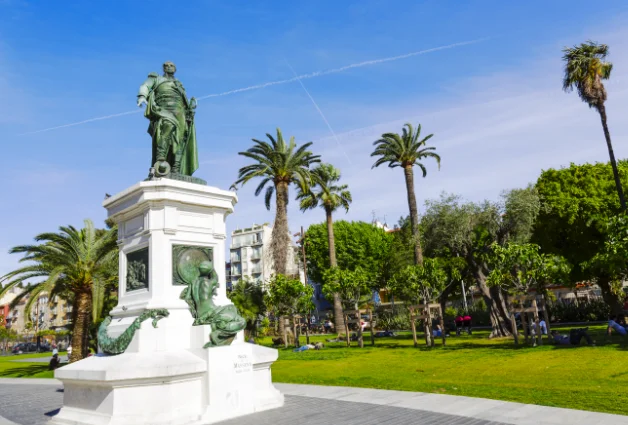
Promenade du Paillon is a green space in the heart of Nice. It stretches from Musée d'Art Moderne et d'Art Contemporain down to Jardin Albert 1er. This urban park, which won the grand prize at the Victoires du Paysage in 2014, is a great place to visit.
You can make many stops at the park while exploring Nice. It is bordered to the east by Vieille Ville and the west by retailers and hotels like Anantara Plaza Nice.
You can have a picnic in one of the park's green spaces as you admire the beauty of the buildings near it. Its main point of interest is Miroir d'Eau, a section with water jets just west of Fontaine du Soleil. Indulge in getting close to the water show along with other visitors. Don't be afraid to get a little wet. Also be sure to look out for the Massena statue in the park. It's not far from Place Massena.
Many don't know this but Promenade du Paillon is built over the Paillon River. That's how it got its name. However, don't let walking over a river spook you. It was the subject of jokes among the locals and visitors before the park was built because it is dry most of the time. That said, the river has caused some flooding incidents in the past, so pay attention to warnings if you're in town during the fall and winter months.
If you're curious about the river, walking up north past Palais des Expositions will reveal it. You can also use your favorite mapping app to see the parts of the river that are still exposed. It stretches far up north beyond the borders of Nice.
Port Lympia
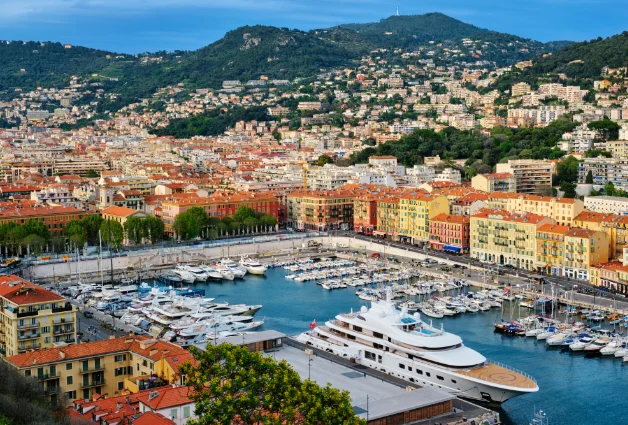
Port Lympia, the main port in Nice is just east of Parc de la Colline du Château. It is named after a spring that used to be on the site before the harbor was built in the mid-1700s. While it's not one of the large ports on the French Riviera, you'll find yachts and fishing boats of various sizes docked at the port.
You'll also find restaurants and various houses in pastel pink, mango yellow, and deep crimson red around the harbor. It has the look of something out of an impressionist painting. While at Port Lympia, you can't miss Monument aux Morts de Rauba-Capeù, a 32-meter-high war memorial across the street from the port.
Monument aux morts de Rauba-Capeù
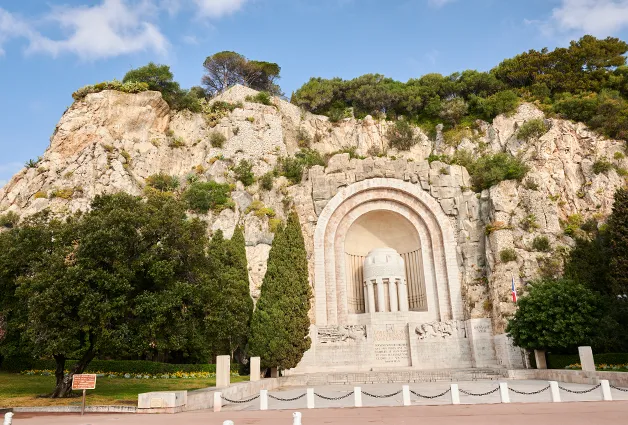
Roger Séassal, an architect known for his work in Nice, worked on Monument aux morts de Rauba-Capeù (The Monument to the Dead of Rauba-Capeu) between 1924 and 1928.
The large structure built to honor people from Nice who passed away during the First World War is one of the biggest empty tombs in France. It is at the bottom of Castle Hill, directly opposite Port Lympia.
Here, visitors can take in views of the area and La Baie des Anges while honoring the memory of the people the monument was built to remember. After spending some time at the monument, you can walk up Castle Hill to Parc de la Colline du Chateau, where sublime views of Nice await you.
Musée Matisse
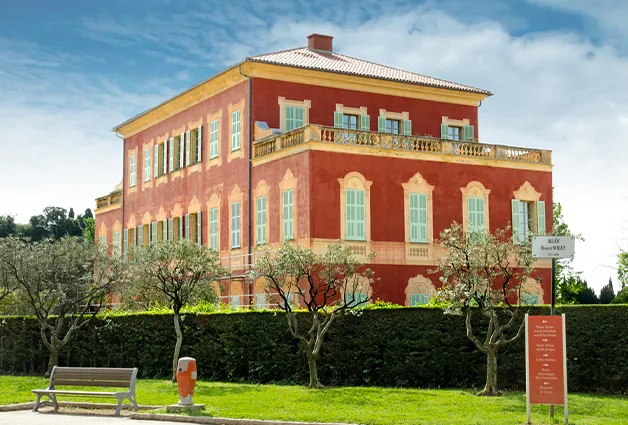
As the name suggests, the Musée Matisse (Matisse Museum) is a gallery which houses the work of French painter Henri Matisse. Located in a 17th-century villa, the museum opened its doors in 1963.
It is one of the world's largest displays of Matisse's work and features some of his best-known paintings, sculptures, and sketches. Henri Matisse, who lived in Nice between 1917 and 1954, donated most of the artwork within the museum. It also features personal artifacts donated by his estate.
Musée Masséna
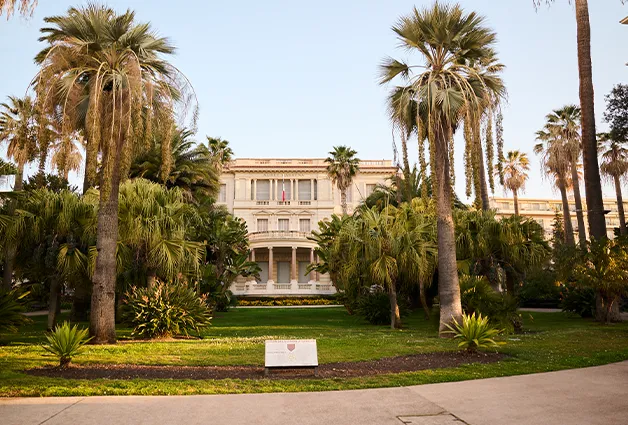
Visitors looking to learn more about Nice's history should step through the doors of the Musée Masséna on Promenade des Anglais, next door to Le Negresco Hotel.
Within the walls of this villa designed by Hans Georg Tersling, you'll find plenty about the region's history, and Napoleon Bonaparte exhibits. If you want to learn more about Napoleon, Musee Massena is the place to visit.
One major selling point of the museum is the well-maintained floor. It offers a hint of how the villa looked in its glory years.
You can also explore the gardens designed by famous landscape designer Edouard Andre, who also designed Jardins du Casino (the gardens of Place du Casino) in Monaco.
Other Art Museums

Pinning down just one must-visit art museum in Nice is difficult. The city is home to an eclectic range of art museums that should be explored by those who love art.
Musee des Beaux-Arts de Nice is filled with works dating from the 15th to the 20th centuries. It is home to works by Rodin and Pablo Picasso. Musee National Marc Chagall (Chagall Museum) is another art museum in Nice. It is devoted to the works of famed artist Marc Chagall.
Although there are works by other painters in the gallery, Musee Chagall's real magic is in the paintings, sculptures, stained glass, and mosaics created by the museum's namesake.
Travelers seeking modern art should visit the Musée d Art Moderne et d Art Contemporain. The contemporary art museum opened in 1990 in a sleek building that is as upbeat as the art it houses. The gallery includes works from the New Realism, Pop Art, American Abstracts, and Minimalists genres dating from the 1960s and 1970s.
Le Negresco Hotel
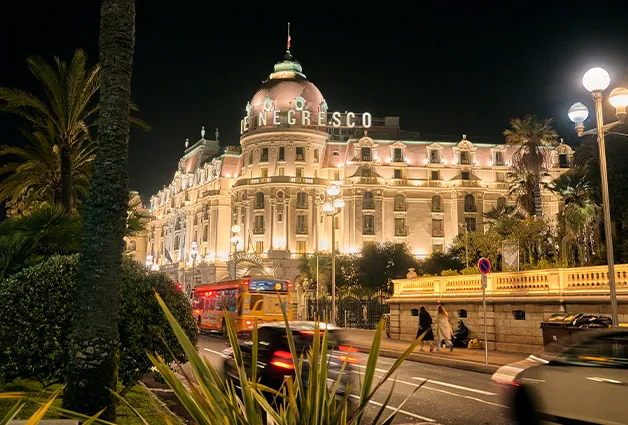
Often referred to as a 5-star hotel and museum in one, Le Negresco is an iconic landmark along Promenade des Anglais. The hard-to-miss Belle Époque style building is located right next to Villa Massena.
It's also one of the few hotels on Promenade des Anglais with private beaches. In addition to being a storied hotel with tastefully furnished rooms and themed suites, Le Negresco has a large collection of artwork in its hallways, suites, and the famous Royal Reception Room.
Each floor has different art themes, and if you're staying at the hotel, you're encouraged to wander around the floors to explore the art.
Guests at the hotel who like vintage items may enjoy riding on the elevator. It has maintained its look since the hotel's opening in 1913. This includes the classic control on the inside, which has since been decommissioned in favor of something more modern.
If you decide to stay at another one of Nice's hotels, all is not lost. You can still see the artwork by reserving a table at Le Chantecler, the hotel's Michelin-starred restaurant. Remember to book well in advance as the restaurant is very popular, and even guests at the hotel may not get a spot at short notice.
Mont Boron

You can make the case that Nice's most beautiful attraction is the views of the Mediterranean Sea it offers from Parc de la Colline du Chateau or Promenade des Anglais.
However, what you may not find in many travel guides is the fantastic views from Mont Boron. As the name suggests, Mont Boron is on a hill. It is east of Port Lympia and west of Saint Jean Cap Ferrat.
Once you make it to the top, you'll find Parc du Mont Boron. It is a large park with hiking trails to help you burn off the calories from the French cuisine you've been eating during your trip.
The park also has Fort du Mont Alban within it. It is a 16th-century fort that is still mostly intact. While the fort isn't open to the public, history buffs will enjoy observing the well-preserved exterior.
But the main attraction of Mont Boron is the gorgeous views of the Mediterranean Sea that are arguably better than what you'll see from Parc de la Colline du Chateau. Unlike other parts of Nice, you won't find a crowd here, so you can enjoy the clear air and views in a quiet place.
Libération
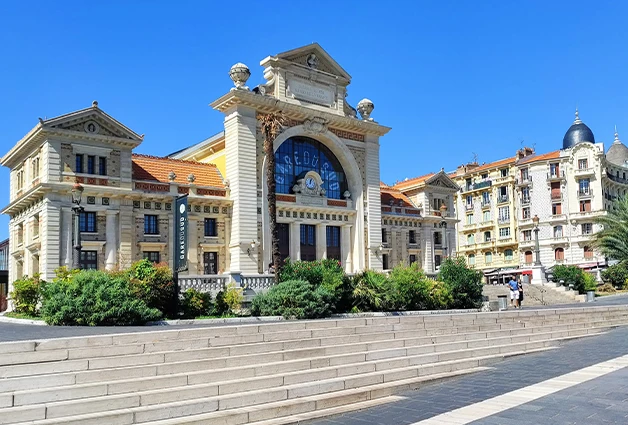
Libération is a vibrant district that offers visitors a taste of local life away from the tourist-heavy parts of the city. Known for its lively Marché de la Libération, one of the largest markets in Nice, the neighborhood is a favorite among locals and visitors.
The market is open daily and offers fresh produce and flowers. The colorful stalls, aromas of fresh food, and lively vendors give visitors a glimpse of what life is like in Nice. The area is charming, with its tree-lined streets, Belle Époque buildings, and vibrant café culture. In addition to its famous market, it is a great place for shopping and dining.
Libération has seen some changes in recent years. It now has trendy boutiques, artisan shops, and popular restaurants popping up alongside old bakeries and cafés. The Gare du Sud, a historic train station converted into a modern food hall, is a must-visit spot here. It offers a variety of food stalls and cultural spaces.
Marche aux Fleurs Cours Saleya

Marche aux Fleurs Cours Saleya is an outdoor fruit and flower market on the southern border of Vieille Ville. Open every day except Monday, the vendors sell a range of fresh flowers, herbs, fruits, and greens. The market also has a section for antiques.
The aroma of the flowers and the fresh breeze are soothing. You'll want to stay in Saleya market all day, and there's no reason why you shouldn't. If you're into street food, you'll find plenty of options, including Pan Bagnat, Pissaladière, and Socca. Be prepared to wait in line for your Socca as the best places to get it are very popular.
In the summer months (June-September), the market is open late into the night. Be sure to stop by an ATM before you go to the market, as most vendors will only accept cash.
Cathédrale Saint-Nicolas de Nice
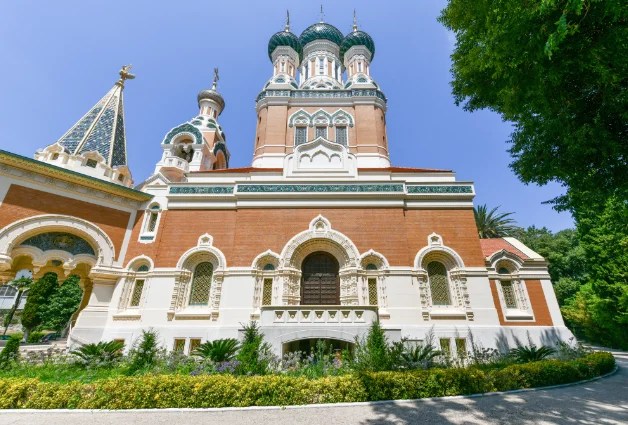
Cathédrale Saint-Nicolas de Nice (St. Nicholas Russian Orthodox Cathedral) stands out as an iconic landmark in the city. Its striking emerald onion domes, ornate brick-and-stone façade, and delicate golden crosses rising above the city's rooftops deliver a hard-to-ignore attraction.
Inspired by Saint Basil's Cathedral in Moscow, it feels like a slice of old Russia delivered to the Côte d'Azur. Set in a small garden, the cathedral offers photo opportunities from every angle and tells a little bit of the story of the Russian aristocracy who wintered in the area in the 19th and early 20th centuries.
Inside, visitors step into a richly decorated world of painted icons, gilded details, carved woodwork, and hanging lamps that glow softly in the filtered light. The cathedral remains an active place of worship, so visitors can experience the atmosphere of an authentic Orthodox service.
Guided tours are available to anyone with more than a passing interest in the building. You can also visit the crypt museum for more information about its history.
Place Garibaldi
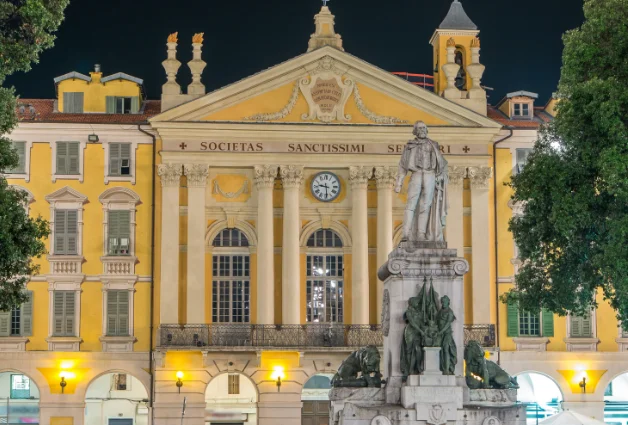
Place Garibaldi serves as a link among the Old Town, the city center, and the Port district. Architect Antonio Spinelli designed the square in the 18th century. It is one of the oldest and largest squares in the city, and its long arcades and ochre façades reflect Nice's historic ties to the House of Savoy.
At the center of the square stands a statue of Giuseppe Garibaldi, the famed Italian patriot who was born in Nice. The restaurants around the square and the tram line running through it make it feel lively. It's a great place to take a break while exploring the city.
Walking east from the square reveals a dramatic path to the entrance of MAMAC, with 18th-century Baroque buildings on both sides. It is a sight worthy of a few Instagram photos.
The Beaches of Nice
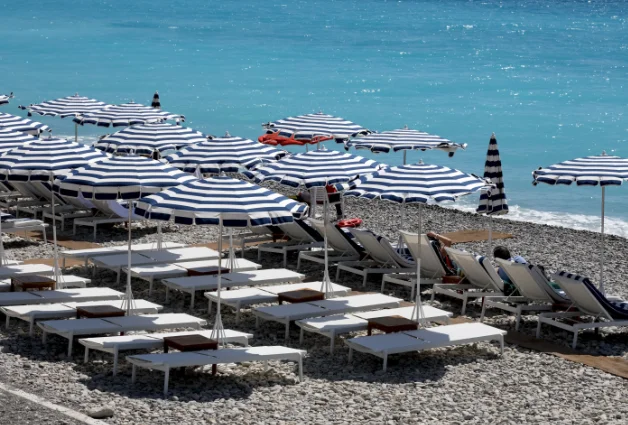
Almost all the beaches in Nice are lined with smooth pebbles known as 'galets'. These give the beaches a distinctive beauty. However, they can be harsh on the feet, so bring a pair of water shoes.
The city has a variety of beaches, and Promenade des Anglais provides easy access to many of these. There's a mix of serviced private beach clubs (some owned by nearby 5-star hotels) and public beaches where travelers can enjoy the crystal-clear waters.
Plage Beau Rivage is one of the most popular beaches here. It features a private section and a public part. Plage Publique de Castel, beneath Castle Hill, provides a more secluded setting along with a beachside cafe.
Other beaches include Plage Publique de l'opera, one of the oldest private beaches in the city (it got its name from the nearby Nice opera house), and Plage Des Bains Militaires. Whether you're looking to take a dip in the warm waters, bask in the sun, or enjoy fresh seafood, these beaches provide a satisfying escape.
Château de Crémat
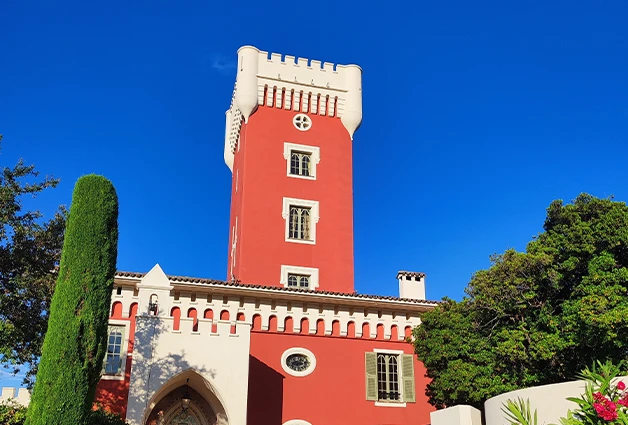
Château de Crémat is a winery on a road called Chemin de Crémat, close to the northwestern border of Nice. Wealthy olive merchant Antoine Mari built the chateau in 1906. The winery is far from the crowds of tourists in places closer to the bay but not far from the city center.
Just a 17-minute drive from Promenade des Anglais, the chateau opens its doors to guests to experience its wine and vineyards. Anyone can visit the tasting rooms for some of the best wines in the region, sourced from the vineyards with organic grapes around the chateau.
You can either come in for wine tasting, take a full tour of the vineyard and the chateau's interior, or spend up to five hours on a picnic in the gardens. The picnic option offers a picnic basket with pissaladière, crudites, cheese, and the local favorite, pan bagnat.
Choosing the picnic option is a good way to enjoy the peaceful place while you have fine wine and tasty local dishes. Before you leave, you should stop by the shop to get a bottle or two of your favorite wine.
Saint-Jean-Cap-Ferrat
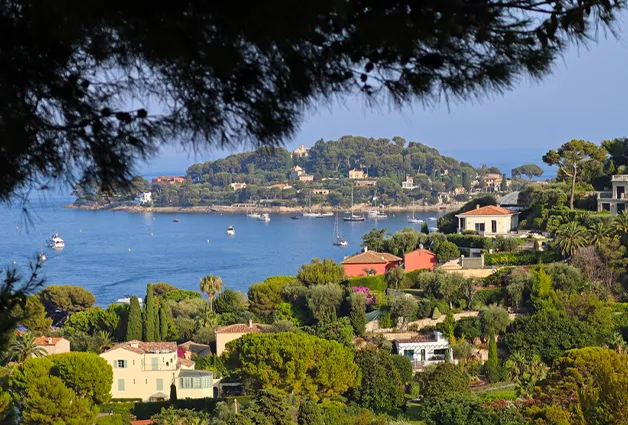
If the beautiful cliff-side villas in Mont Boron impress you, there are some nearby towns you should visit. Tourists seeking to explore other parts of the French Riviera should consider Villefranche-Sur-Mer and Saint-Jean-Cap-Ferrat for a day trip from Nice.
Both are a few minutes east of Nice and perfect for day trips. The Saint Jean Cap Ferrat peninsula shares the same appeal as Mont Boron but on a larger scale.
Saint-Jean-Cap-Ferrat is one of the most expensive residential locations in the world, and there are many large villas here. However, unless you have a friend who owns one of these villas or you're thinking of buying one, you won't be able to get a close look at most of them.
But before you call your realtor, you should note that what's arguably the best villa here is open to the public. Béatrice Ephrussi de Rothschild, a member of the Rothschild banking family, built Villa Ephrussi de Rothschild, a Tuscan-style palazzo in 1912.
The villa's grounds are just as impressive as the building. It has nine gardens, each with a different theme. Beyond the villa, other attractions include glorious beaches, Villa Les Cèdres (once the most expensive house on earth), and the Cap Ferrat semaphore, built under the instruction of Emperor Napoleon III.
AGS Formule 1 at Circuit du Var
AGS Formule 1 at Circuit du Var is just 90 minutes away from Nice. The former F1 team's facility is perfect for racing fans visiting the city. After enjoying all Nice has to offer, you can drive to AGS Formule 1 to explore the 1.4-mile-long auto-racing track in an open-wheel racecar.
You can take one of the driving courses and speed around the track in a real Formula One car. The tight corners and fast straights will give you a real sense of what it's like to be a Formula One driver. You can choose from a number of Formula One cars to learn all about driving an open-wheel car from trained instructors.
Day Trip to Èze

The medieval Èze Village is perched high above the French Riviera. It is one of the most charming spots in southern France. Just a 26-minute drive from Nice, it is perfect for a day trip. The village offers sublime views of the Mediterranean Sea and other parts of Côte d'Azur from its clifftop position.
Èze is known for its narrow streets with stone houses, art galleries, and shops. Visitors can explore its rich history and admire the well-preserved houses while strolling through the streets.
One of the highlights of the village is the Exotic Garden (Jardin Exotique). It is at the highest point in the village and offers views of the coast and a collection of cacti.
In addition to its natural beauty, Èze is famous for perfumery. It is home to the Fragonard Perfume Factory, where visitors can learn about the art of perfume-making and even create their own. The village has two 5-star hotels, so feel free to stay for more than a day.
Best Time to Visit
Nice is a very popular destination, and its year-round good weather keeps people coming. You may be tempted to avoid going in the summer months (to avoid the crowds) and that's not a bad idea if you're not planning on any water activities. But no one goes to the South of France only to avoid the water, right? Early spring isn't ideal, as the waters in the region are still too cold for water activities. We learned that the hard way while filming in Cannes & Nice. If avoiding the crowds is an absolute must, late spring or early fall is the best time to visit Nice.

Local Favorite: Socca
Socca is street food you will find around the city of Nice and other parts of the French Riviera. It is a thin, crusty pancake made from chickpeas cooked in a wood-fired pizza-style oven. While the surface is crusty, the inside is soft. It's common to see kids tucking into socca following a day at school. Locals also enjoy it with a glass of wine or beer at a bar. Rumors suggest socca originated in 1543 when Turkish armies invaded Nice. As the story goes, the Nice fighters ran out of bullets, so they mixed chickpea soup and hot oil. They then poured the mixture down the walls of the city onto the heads of the Turks. Regardless of how well that worked, the Nice fighters tasted the oil and chickpea mix and fell in love with it.