





With so many places to visit and things to do in Rome, it's no wonder that the ancient city is one of the first to come to mind when considering a European vacation. Often referred to as 'The Eternal City' due to its origins dating back to the first century, Rome is filled with history, architecture, and must-see attractions that make it stand out.
Many of Rome's attractions such as the Colosseum, the Vatican, and the Pantheon, are on the list of most visitors. However, there are also attractions off the beaten path you shouldn't ignore. These include the Appian Way, the Catacombs, and local spas, which are just as intriguing.
In addition, car and racing enthusiasts will find plenty of great reasons to visit the Italian capital. The Autodromo Vallelunga Piero Taruffi offers a one-of-a-kind driving experience. The Museo delle Auto della Polizia di Stato is another place that everyone who's a fan of the internal combustion engine shouldn't ignore.
All roads lead to Rome and everyone should jump at the chance to see the Eternal City at least once during their lifetime. Unless you're visiting the city for an extended period, you likely won't be able to visit every attraction in the city, so you should consider the places on the following list when compiling the things to do in Rome:
Best Things to Do in Rome
The Colosseum

The Colosseum is Rome. No venue, attraction, or landmark defines the city like the Colosseum. No image or photograph does the Colosseum justice. It is massive and is everything tourists expect it to be. Lines to get inside can be long, but tourists can buy a Rome Pass which allows them to bypass queues to get inside many of the sites.
While the outside of the Colosseum is impressive, nothing tops the inside of the arena. Visitors will see where thousands of Romans used to view bloody sporting events. The Colosseum influenced all modern sports stadiums. So, travelers shouldn't miss the chance to experience the original.
The Pantheon

The enigmatic building called the Pantheon is perhaps the best-preserved historic building in Rome. It is believed to be more than 2000 years old and along with the Colosseum, tells the story of Rome's history better than any other landmark. Starting out as a temple that was later converted to a church, there is still a fair amount of mystery surrounding the origin and architecture of the building.
The exterior columns are made from a single stone each. These stones are believed to have been imported from ancient Egypt. Perhaps the most fascinating part of the Pantheon is the geometric shapes all over the interior and the oculus on the roof, which lets in rain on a wet day. The perfectly spherical shape of the dome area continues to mystify visitors and historians alike.
The design of the Pantheon is so alluring that it has inspired the architecture of multiple buildings around the world, including modern buildings like the Guggenheim Museum in New York.
The Forum

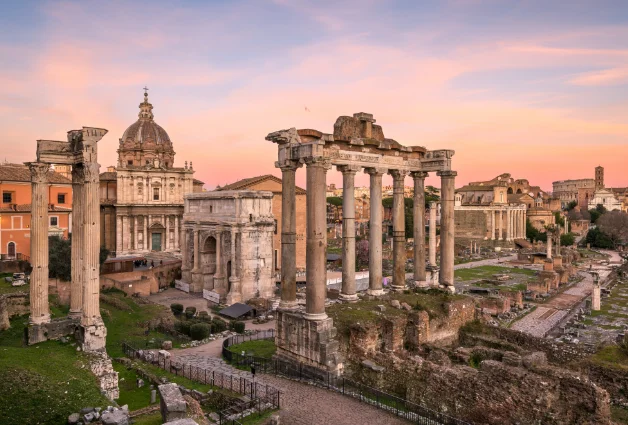
The Forum offers a vivid sense of the city's ancient heart. Once the site of political debate and religious ceremonies, it now unfolds as an open-air archaeological site between the Palatine Hill and the Colosseum. Walking through the Forum allows visitors to see where temples, basilicas, and triumphal arches once shaped the identity of the Roman Empire.
Highlights include the Arch of Septimius Severus, the Temple of Saturn, and the remains of the Curia, the seat of the Roman Senate. Despite being in ruins, these monuments create a grand atmosphere. You shouldn't be in a hurry when visiting The Forum. Slow exploration is the way to go to fully appreciate the history and architecture.
Early morning or late afternoon tends to be especially enjoyable, when the light adds an additional appeal to the site.
Piazza del Popolo

Piazza del Popolo is one of Rome's largest squares. It is a good starting point for sightseeing. Start from the Porta del Popolo gate, and you'll see the imposing Flaminio Obelisk at the center as you approach the square. The obelisk is surrounded by four artful lion fountains.
At the south end, the intriguing "twin" churches Santa Maria dei Miracoli and Santa Maria in Montesanto frame Via del Corso, a route that leads to Monumento a Vittorio Emanuele II. On the north side, Santa Maria del Popolo houses works by Caravaggio and Bernini.
Fontana del Nettuno and Fontana della Dea Roma are two corner fountains in the square worthy of a close look. As you'd expect, the square is very popular, so come early (or just before sunset) for photos with fewer crowds.
Villa Borghese

Need a break from all the awe-inspiring historical landmarks? Villa Borghese is the place for that. It is a central green escape and landscaped park with museums. The park is just north-east of Piazza del Popolo.
A popular stop in the park is the lake and the Temple of Aesculapius. You can rent a rowboat to get a closer look at the temple, or walk around the lake on foot. Other crowd favorites include Cinema dei Piccoli. The 63-seat cinema was once the world's smallest cinema. Even though it lost that title to the Little Prince Micro-Cinema in Ontario, Canada, it remains a great place for family fun.
For some intriguing views, head over to the Terrazza del Pincio at the southern edge. You'll be treated to a panorama of Piazza del Popolo.
Castel Sant'Angelo

Taking a fifteen-minute walk north from the Pantheon, you'll arrive at Ponte Sant'Angelo, one of many bridges over the River Tiber. Unlike some of the other bridges, this is a footbridge with five arches with standout decorative angel statues on both sides. The bridge leads to Castel Sant'Angelo, a second-century rotunda castle originally built as a mausoleum. Over time, it also functioned as a fortress and a prison.
Today, it houses Museo Nazionale di Castel Sant'Angelo, a museum that gives visitors an opportunity to explore the castle's history. Popular among tourists are the rooms that were formerly a papal residence. These rooms have interesting sculptures and well-preserved frescoes from the Renaissance period. The fifth floor of the castle also has a terrace that offers a panoramic view of Rome.
At the top of the castle is a prominent statue of Archangel Michael. As the story goes, the statue was put in place in 590 after a vision by Pope Gregory I in which he sighted the angel at the top of the castle. Another prominent feature of the castle is Passetto di Borgo, an 800-meter-long fortified corridor that connects the castle to the Vatican.
Surrounding the castle is the geometrically shaped Parco della Mole Adriana, an intriguing park with carefully arranged trees and flower beds. Castel Sant'Angelo's unique appearance has featured in many movies, including Spectre and Elizabeth Taylor's Cleopatra.
Vatican City

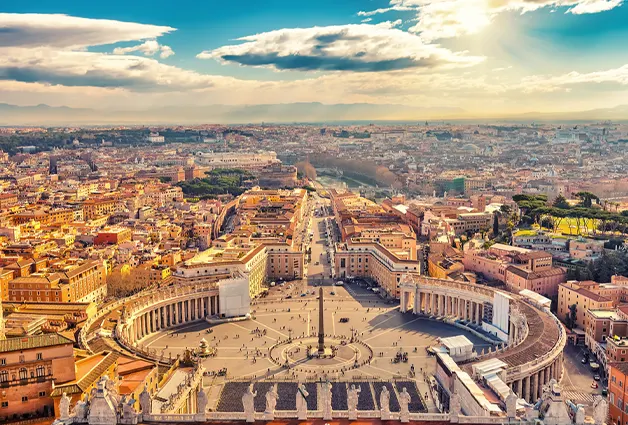
No matter what a tourist's religious affiliation is, Vatican City is one of the most memorable stops on a Roman holiday. Less than one-third of a square mile, Vatican City is the world's smallest sovereign state. Despite its size, it provides a wealth of things to see and do. Visitors will be able to peruse the fantastic little shops that sell Pope-inspired merchandise as they explore the area.
St. Peter's Basilica and St. Peter's Square are both found in Vatican City and are well worth seeing. The lines can be long, so travelers should get there early. Art lovers will find Michelangelo's famous Pieta inside St. Peter's Basilica, but the real highlight is Michelangelo's frescoed masterpiece on the ceiling of the Sistine Chapel. Tourists will find an assortment of other great museums inside the tiny state.
Autodromo Vallelunga Piero Taruffi

The Autodromo Vallelunga Piero Taruffi racetrack is twenty-six miles away from Rome. Racing fans will find the exciting Puresport Driving Experience at the track. The experience offers participants an unforgettable drive in Ferrari, Lamborghini, and open-wheel cars.
You can test your skills on the 2.5-mile track with 15 turns taken at high speeds. Qualified race instructors teach new skills and help improve on existing driving abilities. No matter which supercar drivers choose, the Puresport Driving Experience will satisfy their need for speed.
Appian Way

The Appian Way is another off-the-beaten-path tourist attraction. It was one of the Romans' most important roads, connecting the city with east Italy. Today, it offers a picturesque walk that gets travelers away from the hustle and bustle of Rome. There's also an assortment of attractions along the way, including the Catacombs of San Callisto and the Catacombs of San Sebastiano. In addition, you'll find various basilicas and tombs to explore.
Also along Appian Way, Parco degli Acquedotti (Aqueduct Park) houses the ruins of the aqueducts that were the source of crucial water supply to the ancient city. While the aqueducts are not as well preserved as some other attractions in Rome, what's left of the structures still offers visitors an opportunity to appreciate their magnificence.
Gelateria Della Palma

You've probably heard that Italian ice cream is the best in the world. If you're having doubts about that, here's your chance to put the statement to the test. With over 150 different flavors to choose from, this gelato (ice cream/frozen dessert) shop is a must for any food lover with its traditional and unique tastes. Whether you prefer to stick to what you know and love or choose to branch out, there is something for you. The shop is close to plenty of the city's sights and makes a great stop when you need to take a break.
Piazza Navona

Located in the center of Rome, this iconic square contains three magnificent fountains, including Fontana del Moro, Fontana del Nettuno, and perhaps the grandest of the three, Fontana dei Quattro Fiumi, which has a copy of an Egyptian obelisk in the middle. While these fountains are not as old as some of the better-known attractions in the city, their location in the square helps draw a lot of tourists.
Surrounding the square are dozens of small shops, cafes, and restaurants, giving you everything you need in a small area. As you walk into Piazza Navona, the hum of the city seems to subside a bit, allowing you to take in the artistry of the fountains in relative peace. As you can imagine, there's an abundance of street performers and artists to entertain you while you take a break from your hike around the city.
Trevi Fountain

Designed by Italian architect Nicola Salvi at the request of Pope Clement XII, and completed by Giuseppe Pannini in 1762, Fontana di Trevi (Trevi Fountain) is another very popular attraction among visitors to Rome. Located in the Trevi district of the city in front of Palazzo Poli, the 26.3-meter-high and 49.15-meter-wide fountain is said to be the largest Baroque fountain in the city. In the center of the fountain is an elaborate statue, which many believe is of Neptune. However, the statue is of Oceanus, the titan god.
Over the years, the fountain has been featured in many movies, including the 1954 Academy Award-winning Three Coins In The Fountain. You're likely to find a crowd of tourists here during your visit, and you'll also witness many of them participating in the long-running tradition of tossing coins into the fountain over their left shoulders for good luck. While most people only do it for fun, it's worth noting that the money is donated to charity, so you may want to participate too. It's for a good cause.
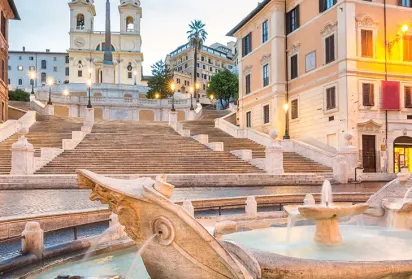
Spanish Steps

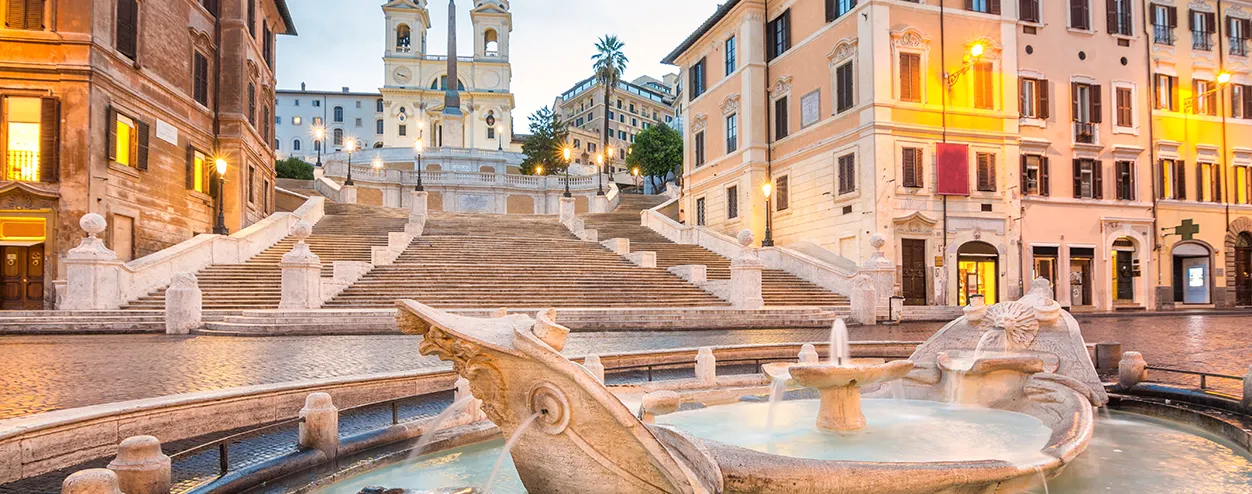
Just nine minutes away from Trevi Fountain, the Spanish Steps (Scalinata di Trinità dei Monti) sit between two other landmarks. At the top, there's Piazza della Trinità dei Monti, where the Trinità dei Monti church houses impressive artwork. At the base is Piazza di Spagna, where you'll find another of Rome's marvelous fountains, Fontana della Barcaccia.
The landmark, designed by the architects Francesco de Sanctis and Alessandro Specchi, was completed in 1725 and has 135 steps. Eagle-eyed Tom Cruise fans will recognize this place from the 2023 Mission Impossible - Dead Reckoning movie. It was the location where the Fiat Tom Cruise and Hayley Elizabeth Atwell were traveling in rolled over. The scene at the Spanish Steps was the longest of the ones shot around landmarks across Rome.
Away from the silver screen, this popular tourist attraction is also a favorite with locals. There's no shortage of street performers around the place, and it's just another one of Rome's numerous alluring historic attractions.
Before you get lost in the history, though, it's worth noting that there are numerous high-profile designer stores around the Piazza di Spagna, including Prada, Dolce & Gabbana, Bulgari, and Dior. That makes it a great place to do all your shopping in Rome.
National Gallery of Contemporary and Modern Art

The Galleria Nazionale d'Arte Moderna e Contemporanea (National Gallery of Contemporary and Modern Art) is one of the most important museums of modern art in Italy. Established in 1883 under the direction of the minister at the time, Guido Baccelli, it has a vast collection on display that any contemporary art fan won't want to miss. The museum is currently housed in a building designed by Cesare Bazzani and has a façade that generates attention with the four figures of fame sculptures at the top.
Art is a huge part of Italian culture, and one of the best ways to immerse yourself in it is right here in Rome. The galleries are home to beautiful paintings and sculptures by artists including Giacomo Balla, Umberto Boccioni, Alberto Burri, and Antonio Canova. Ocean's Twelve fans should note that the museum was depicted in the movie, but filming was done at a nearby school with similar architecture.
Monumento Nazionale a Vittorio Emanuele II (Vittoriano)

Monumento Nazionale a Vittorio Emanuele II, known by many as Vittoriano as well as Altare della Patria (the Altar of the Fatherland), can be found on Capitoline Hill, one of the seven hills of Rome. You could argue that this monument is the city's grandest landmark, but that may be because it's not as old as the other major attractions.
The stunning white monument was built to honor Victor Emmanuel II, the first king of unified Italy. The altar is also home to the grave of the Unknown Soldier. Perhaps the most fascinating parts of the structure are the Corinthian columns, the fountains which pay tribute to the Adriatic Sea and the Tyrrhenian Sea, and the equestrian sculpture of Victor Emmanuel II.
To make things more interesting, the Vittoriano also has an elevator with glass walls behind the structure that allows you to head to the top and enjoy panoramic views of the city. You may not find a better view of Rome anywhere else.
Piazza Vittorio Emanuele II

Piazza Vittorio Emanuele II is a vibrant urban space in the Esquilino district. Built in the late 19th century to honor Italy's first king, it is surrounded by elegant porticoes lined with shops, cafés, and hotels.
At its center lies a spacious public garden, where visitors can discover traces of Rome's layered history. The blend of open greenery and historical intrigue makes the piazza a unique spot that contrasts with other tourist hubs of the city.
Within the garden stand two of the square's most fascinating landmarks: Trofei di Mario and Porta Magica. Trofei di Mario is a monumental fountain built in 226 AD to distribute water from ancient aqueducts. Its name comes from two military trophy sculptures once attached to it, and linked to the general Gaius Marius.
Porta Magica, or "Magic Door," is a 17th-century marble gateway adorned with alchemical symbols. Originally part of the villa of alchemist Massimiliano Palombara, it is steeped in legend and adds a touch of mystery to the square.
Airport
Transportation
- Bus: At Rome Fiumicino Airport, there are plenty of bus lines to the city center and the suburbs.
- Taxi: White taxis are available outside the airport terminals. A taxi trip to the city center takes around 45 minutes.
- Train: Leonardo Express is the direct train that connects Rome Airport with the city center.
Ride Hailing
Uber, Blacklane
Popular Local Cuisine
Carbonara

Carbonara is a traditional Roman pasta dish that is said to be misunderstood by people from outside of Italy. Traditional Roman carbonara is made with a sauce featuring cured pork cheeks known as guanciale, something you might not get in your dish outside of Italy. Tangy pecorino cheese and eggs are also added to make the sauce.
Unlike non-Italian carbonara, no cream is used and never should be. The sauce is then served on pasta. If you try authentic Roman carbonara, it will be completely different from any you have previously eaten. The origins of carbonara are unclear, but one story suggests it was first made in Abruzzo by woodcutters in the Apennine Mountains.
Best Time to Visit
The best time to go to Rome is between April and June or September and October, when the weather is mild. Spring brings blooming gardens and great conditions for hopping from one landmark to another. Early fall offers warm days and a more relaxed atmosphere. July and August can be very hot and crowded, making long days of outdoor sightseeing more tiring. Winter is quieter and offers lower hotel rates, but you may be stuck with cold nights.
Historical Weather by Month
Rome, Italy
Where to Stay
Set-Jetting: Film & TV References