




At some point in time, we’ve all been lectured by our doctors about the importance of sleep to our well-being.
Beyond dedicating the time, it goes without saying that one key factor in ensuring you get enough rest is having a comfortable bed that helps you sleep quickly and stay asleep long enough.
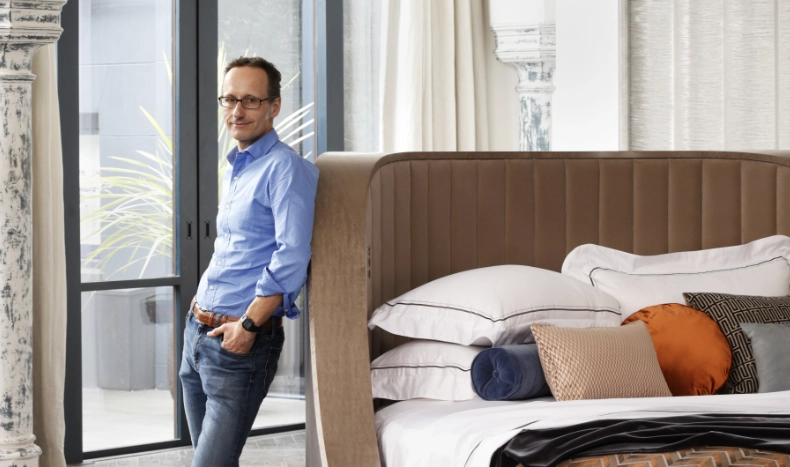
Few in the sleep business do it as well as Savoir. The company makes handmade mattresses and box springs from exotic materials to ensure you get the rest you deserve. As World Sleep Day approaches, we had a few questions for Savoir's Managing Director, Alistair Hughes, about what makes their products so special.
Since each bed is handcrafted, how do you ensure a consistent feel and quality standards across all your products?
Quality and consistency come from having skilled craftsmen and women using the best natural materials. Each craftsperson is totally responsible for one mattress for a specific client, which means they do not work on a repetitive, dull production line where maintaining attention is difficult, and any fault can always be someone else's.

Our craftspeople might spend several days working on the same mattress, taking time and pride, signing it on completion like a work of art. They are responsible, meaning quality issues are eliminated. We also don't continuously 'value engineer' our product, so a client who bought a No2 bed 30 years ago will not find it different today.
Which materials have the biggest impact on keeping people comfortable through the night?
Horsetail hair is the most important ingredient - when the long strands are curled, they create the finest micro springs, taking every contour of your body. At the same time, unlike man-made fibers and foam, horse tail hair breathes and naturally wicks moisture.
Temperature regulation is fundamental to a good night’s sleep, so horse tail really is the king of fillings for any bed, and it takes great skill to lay curled horse tail, so talented craftspeople are essential to its use.

When someone lies on a Savoir bed for the first time, what specific details create that distinct Savoir feel? What about these beds resonates with customers more than anything else?
The right Savoir Bed (and there is a process to finding the right one … it will depend on body shape, weight, among other factors) will allow the sleeper to feel weightless with no pressure points, as if sleeping on a cloud. Some clients like to be cosseted 'in' their bed, others to be supported 'on' their bed. We can provide the ideal feel, whatever the preference, as part of our bespoke process.
When clients opt for the bespoke service, which choices tend to make the biggest difference in comfort and overall sleep experience?
Bespoke can be around comfort (so, for example, a client with broad shoulders may want a softer area at the head end if they are a side sleeper ... we would repeat that at the foot too, so that the mattress can be flipped), which makes a huge difference. Allowing someone to sleep comfortably often has a significant impact on their sleeping partner, who moves less and tosses and turns less.

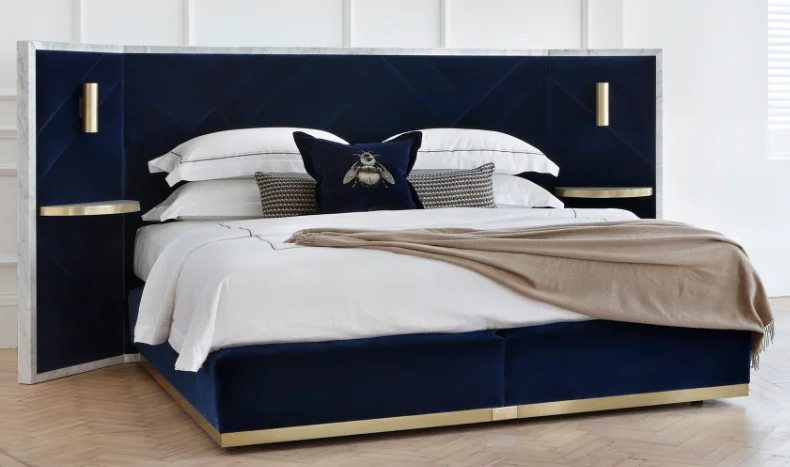
Bespoke can also be around style or to fit a particular surrounding (say, a yacht bed may require tapered sides, for example). This may involve bed shape, fabrics, decorative wood, metal.… the possibilities are endless.
How do you guide a client to the right build, especially when two partners have different sleep preferences?
Each side of a Savoir bed can be different, so catering for different sleep preferences is not an issue. We don't normally share shoes or clothes, so it is hardly surprising that we might have different requirements from a mattress. It is common to have one side softer and the other firmer, for example.
How has your product design evolved in recent years as more clients prioritize wellness, recovery, and sleep tracking?
Wellness and recovery are what we have always been about ... but we now have a better understanding of just how important sleep is and the fact that the consequences of insufficient, or low-quality, sleep are much bigger than we might ever have imagined.

Many clients use sleep trackers, although some argue that the tracking in itself creates stress around sleep, which should not be the case!
If someone were to change only one thing in their bedroom setup, what change would you prioritize to improve sleep?
The bed, of course. Next, eliminate light (blackout curtains or blinds are key) and noise reduction. Get rid of the screens. Essentially, make it a restful sanctuary.
What’s one overlooked sign that a mattress is no longer supporting good sleep, and what should people look for when upgrading?
You feel tired ... it's not just about aches and pains. First point is that it may not just be the mattress - for example, putting a new mattress on a sagging box spring will not help, as the mattress may still feel saggy.
An even surface does not mean that a mattress does not sag, as the sag can be due to weakened springs in certain areas. It’s important to look at the bed holistically and consider every element.



View the article image gallery